Luxury Vinyl Flooring Review for Arizona Homes
Arizona flooring has to handle more than daily foot traffic. It may sit over a concrete slab, face intense sunlight through wide windows, and transition between cooled indoor rooms and heat near exterior doors. This luxury vinyl flooring review looks at whether LVP and LVT are a smart fit for Mesa-area homes, with an honest look at where these products perform well and where another flooring choice may be better.
What Luxury Vinyl Flooring Actually Is
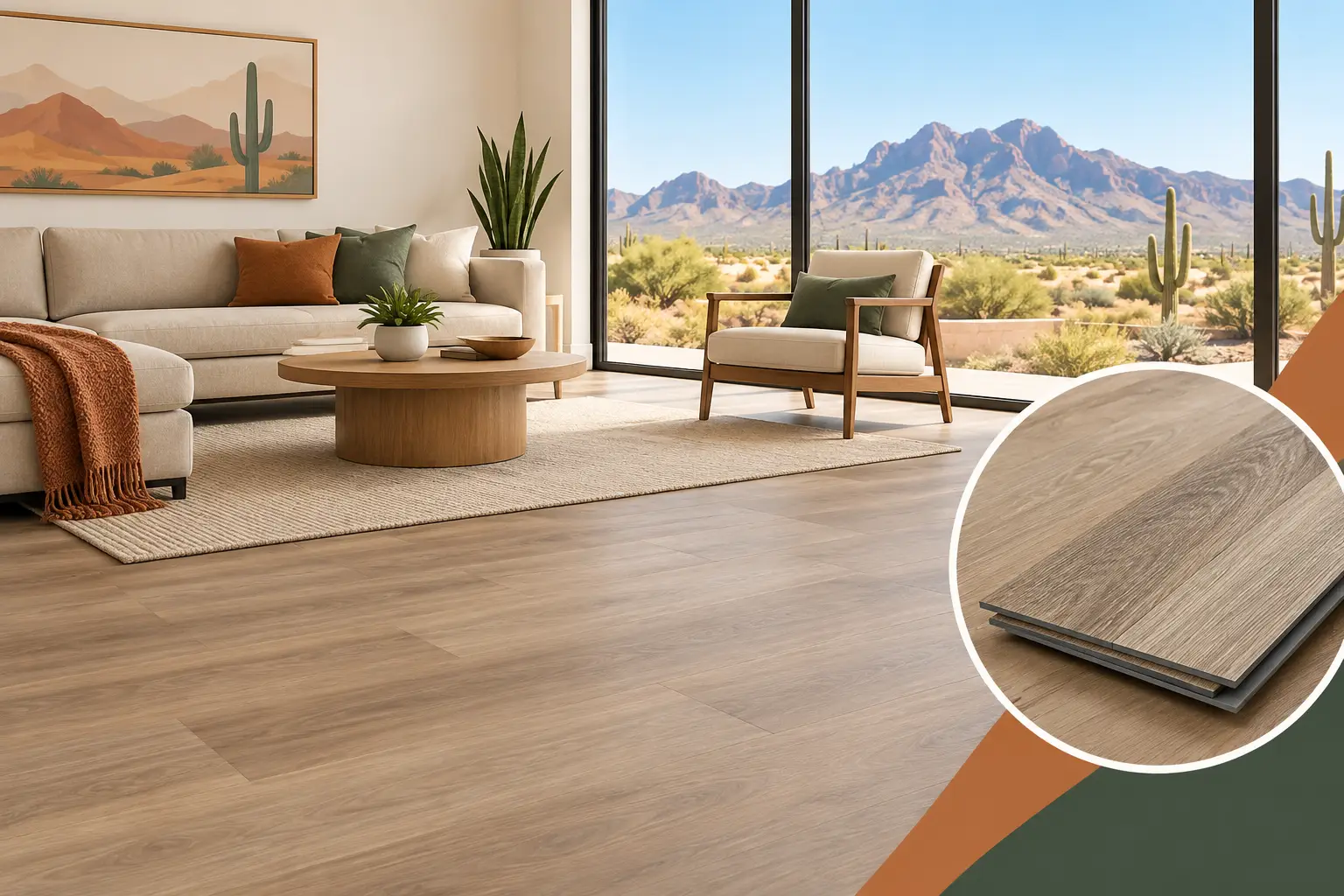
Luxury vinyl flooring is a layered, resilient flooring product made to resemble wood, stone, or tile. Luxury vinyl plank, often called LVP, is shaped like hardwood planks. Luxury vinyl tile, or LVT, comes in tile-style formats that can imitate ceramic, natural stone, or concrete.
A typical product includes a protective wear layer, a printed design layer, a stable core, and a backing layer. The quality of each layer matters. Two floors can look similar in a showroom but perform very differently after years of chair movement, pet traffic, spills, and Arizona sunlight.
Many homeowners choose between two common core types. SPC flooring has a stone-polymer composite core that is dense, firm, and dimensionally stable. It is often a good candidate over concrete slabs. WPC flooring has a wood-polymer composite core that typically feels softer and warmer underfoot, although it may be less resistant to heavy point loads than SPC. Neither is automatically the right choice for every room. The product, subfloor conditions, and intended use should guide the decision.
Luxury Vinyl Flooring Review: The Strongest Benefits
The main appeal of luxury vinyl is practical versatility. It can provide the visual warmth of wide-plank oak or the clean appearance of large-format stone without the maintenance demands or installation constraints of some natural materials.
Water resistance is a major advantage. Most luxury vinyl products can handle routine spills, wet shoes, and normal bathroom or kitchen moisture when properly installed. That makes it a useful option for active households, rental properties, and commercial spaces where easy cleanup matters. It is also more forgiving underfoot than ceramic tile, which many homeowners appreciate in kitchens and laundry rooms.
Durability can be very good, but it should not be assumed from the words “luxury vinyl.” The wear layer is one of the details worth reviewing. A thicker commercial-grade wear layer generally offers better protection from scratches and scuffs than a thin residential-grade layer. Textured finishes and realistic embossing can also help disguise minor marks better than smooth, glossy surfaces.
Luxury vinyl is typically easier and faster to install than site-finished hardwood or tile. Floating click-lock systems can reduce installation time when the substrate is properly prepared. Glue-down luxury vinyl is another dependable option, especially in larger areas or commercial settings where a more secure, stable installation is needed. The right installation method depends on the flooring product, the slab or subfloor, room conditions, and manufacturer requirements.
For remodeling budgets, luxury vinyl often delivers a favorable balance of appearance and cost. It is not always the lowest-priced flooring on the market, but it can offer long-term value when a homeowner wants a durable finish with fewer maintenance concerns than hardwood and a warmer feel than tile.
Where Luxury Vinyl Has Limits
No flooring material is maintenance-free or indestructible. Luxury vinyl may be waterproof at the surface, but that does not mean the entire floor system is protected from every water problem. Water can still reach the subfloor or slab edge through gaps, failed transitions, plumbing leaks, or flooding. A damaged substrate must be addressed before new flooring is installed.
Heavy furniture, appliances, and rolling loads can leave dents or stress joints, particularly with softer-core products. Furniture pads, appropriate appliance protection, and careful material selection help reduce that risk. If a room will carry extremely heavy equipment or constant commercial traffic, a glue-down product or another flooring system may be more appropriate.
Direct sunlight deserves special attention in Arizona. Quality products are designed for normal indoor exposure, but strong UV light and heat can affect color and performance over time. Rooms with large south- or west-facing glass doors may benefit from window coverings, UV-filtering glass treatments, and a flooring product specifically rated for those conditions. Do not assume every vinyl plank is suitable for a sunroom or enclosed patio.
Luxury vinyl can also telegraph imperfections below it. Click-lock planks may bridge minor variation, but they do not correct a slab that is uneven, cracked, damp, or out of manufacturer tolerance. Glue-down flooring is even more dependent on a smooth, properly prepared surface. Skipping prep work may save money at the start, but it can lead to visible defects, joint failure, or premature replacement later.
How It Compares With Tile, Hardwood, and Laminate
Tile remains a strong option for Arizona homes because it is hard, durable, and well suited to heat. It is especially practical in entryways, bathrooms, and areas with frequent moisture. The trade-off is comfort: tile is harder and often colder underfoot, and grout requires periodic cleaning and maintenance.
Hardwood offers a natural character that luxury vinyl cannot fully duplicate. It can be refinished, repaired, and valued for its long lifespan. However, hardwood is more sensitive to moisture, scratches, and changes in indoor conditions. It also requires a larger investment in many cases. Luxury vinyl makes sense when homeowners want a wood-look floor for kitchens, bathrooms, or busy family spaces without the same level of upkeep.
Laminate can offer convincing wood visuals at a lower material cost, but traditional laminate is generally less forgiving of water exposure. Modern water-resistant laminate has improved, yet luxury vinyl remains the more practical choice for rooms where spills and wet cleaning are common.
The best comparison is not simply which product costs less per square foot. It is which material fits the room, expected wear, comfort preferences, existing substrate, and long-term maintenance plan.
What to Check Before Choosing a Product
Start with the room, not the sample board. A light-colored plank may look excellent in a bright Mesa living room, but its performance depends on window exposure, furniture placement, traffic patterns, and the condition of the floor below.
Ask to see the product specifications, including wear-layer thickness, warranty terms, approved installation methods, and temperature limitations. Confirm whether the warranty covers residential or commercial use, and whether it requires moisture testing or specific underlayment. These details affect both performance and manufacturer coverage.
Color and plank width deserve practical consideration as well. Wide planks can make an open space feel larger, while narrower boards can work well in smaller or more traditional rooms. Medium-tone colors and textured finishes often conceal everyday dust and light scratching better than very dark, glossy floors. In a home with pets, children, or frequent guests, that can make day-to-day upkeep noticeably easier.
Before installation, the existing floor should be assessed for flatness, moisture, cracks, and transitions to adjacent rooms. On concrete slabs, proper moisture testing is not an optional extra. It is a necessary step in selecting the right materials and installation system. A detailed flooring proposal should account for removal, surface preparation, underlayment or moisture mitigation if needed, baseboards or trim, transitions, and final cleanup – not just the price of the planks.
Is Luxury Vinyl Flooring Worth It?
For many homeowners, yes. Luxury vinyl flooring is worth considering when the goal is a durable, attractive, easy-to-maintain surface for kitchens, bathrooms, living areas, hallways, and rental or commercial interiors. It is especially compelling when a project needs the look of wood or stone with more everyday moisture tolerance and a more controlled budget.
It may not be the best choice when the priority is authentic natural material, refinishing potential, or extreme resistance to heavy point loads. It also should not be installed over unresolved slab moisture, structural movement, or damaged subflooring. The right answer depends on the building conditions as much as the flooring style.
A careful site assessment turns a flooring decision from a showroom guess into a lasting improvement. D3 Construction helps Mesa-area homeowners evaluate the existing surface, review practical material options, and plan installation details that support a clean, durable finished floor.