Quartz Countertop Review: Worth It in Arizona?
A countertop can look perfect in a showroom and still be the wrong fit for a busy Arizona kitchen. The question behind any quartz countertop review is not simply whether quartz is attractive. It is whether it will hold up to daily cooking, direct desert sunlight, family traffic, cleaning habits, and the budget required for a lasting kitchen remodel.
For many Mesa-area homeowners, quartz is a strong choice because it offers consistent color, low maintenance, and a polished finished appearance. It also has limits that should be considered before materials are selected, ordered, and installed.
Quartz Countertop Review: The Short Answer
Quartz countertops are engineered slabs made from crushed natural quartz combined with resins, pigments, and binding materials. The result is a dense, nonporous surface available in a wide range of colors and patterns, including designs that resemble marble, granite, concrete, and natural stone.
For most indoor kitchens and bathrooms, quartz performs very well. It resists staining better than many natural stone options, does not need routine sealing, and gives homeowners reliable visual consistency from slab to slab. These qualities can make it especially appealing when a remodel calls for clean lines, bright finishes, or a specific cabinet-and-countertop color combination.
The trade-off is heat tolerance. Quartz is durable, but its resin content means it is not the right surface for placing hot pans directly from the oven or stove. It can also fade or discolor with prolonged exposure to intense UV light, making it a poor fit for uncovered outdoor kitchens in the Phoenix area.
Why Quartz Works Well in Indoor Kitchens
The strongest advantage of quartz is its everyday practicality. Unlike porous natural stone, it does not typically absorb spills from coffee, wine, cooking oil, or tomato sauce when cleaned in a reasonable amount of time. That makes it a reassuring option for households that use their kitchens every day and do not want a maintenance-heavy material.
Quartz also has a predictable appearance. Natural granite and marble are formed by nature, so each slab has variations in veining, movement, and color. Many homeowners appreciate that character, but it can make planning more difficult. Quartz gives more control. If you are aiming for a soft white kitchen, a warm beige look, or a dramatic dark island, it is easier to evaluate the overall result before installation.
This consistency matters in larger kitchens where several slabs may be needed. A carefully selected quartz product can create a coordinated look across perimeter counters, islands, backsplashes, and bathroom vanities without the stronger variation found in natural stone.
A practical choice for active households
Quartz stands up well to normal kitchen use. It is hard, resists scratches better than softer materials, and cleans easily with mild soap, water, and a soft cloth. Families, rental property owners, and homeowners planning to stay in their homes for years often see value in a surface that looks refined without demanding specialized upkeep.
That does not mean quartz is indestructible. Sharp knives can still damage a countertop edge, heavy objects can chip corners, and harsh cleaners may dull the finish over time. A cutting board, a trivet, and sensible daily care still matter.
The Arizona Considerations That Matter Most
Arizona homes present a few conditions that should shape the material decision. Bright natural light is a major design asset, but it can also expose weaknesses in countertop materials. Quartz works best inside, where direct sun is managed through window coverings, overhangs, or thoughtful kitchen layout.
If a countertop will sit beside a large south- or west-facing window, discuss the slab color and sun exposure during planning. Lighter surfaces are often a practical choice in bright kitchens because they tend to show less visual change over time than very dark colors. The exact product also matters, since formulations and manufacturer warranties can differ.
Heat is the second consideration. Quartz can tolerate routine kitchen temperatures, but sudden extreme heat can cause thermal shock, scorching, cracking, or discoloration. Set hot cookware on trivets or heat pads, not directly on the surface. This is a small habit, but it protects a significant remodeling investment.
For outdoor bars, patios, and uncovered grilling areas, porcelain, granite, concrete, or another exterior-rated product may be a better option. A good material decision should match the space rather than force the same look into every area of the property.
Cost: What Homeowners Should Expect
Quartz is generally a mid- to upper-range countertop option. Final pricing depends on the brand, design, slab thickness, number of seams, edge detail, sink cutouts, demolition needs, and the complexity of installation. A simple galley kitchen with a standard edge profile will cost less than a large kitchen with a waterfall island, full-height backsplash, undermount sink, and multiple cutouts.
It is also important to compare complete project pricing, not just a square-foot figure. A low material price may not include templating, fabrication, delivery, removal of old countertops, plumbing disconnection and reconnection, or repairs to cabinets and walls. Those details affect both the budget and the finished result.
Quartz can be a smart long-term value when its low-maintenance qualities fit the household. But it is not automatically the best value for every remodel. If the kitchen sees minimal use, if natural stone variation is a priority, or if the budget is tight, a quality laminate or carefully chosen granite may be more appropriate.
Design Strengths and Limitations
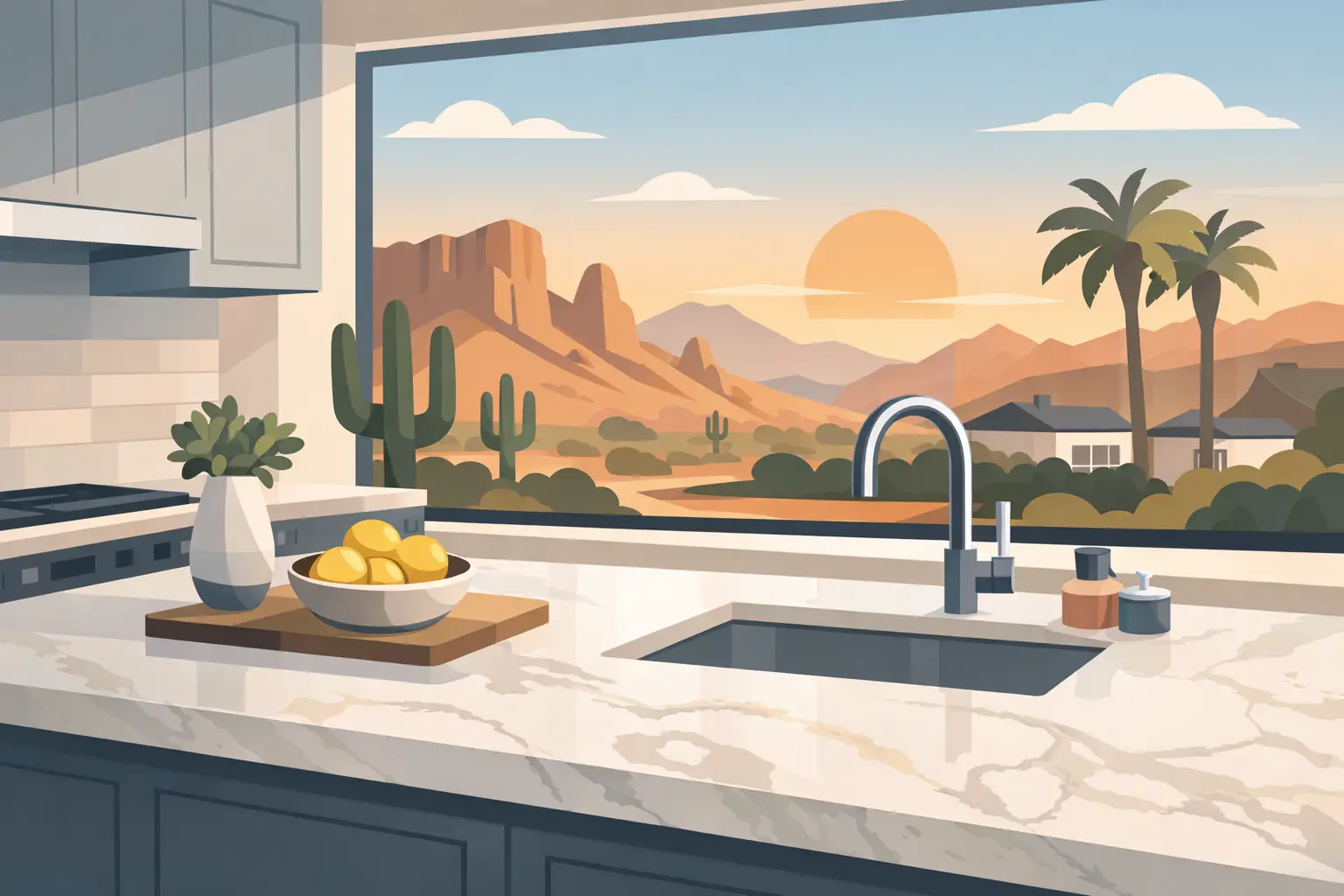
Quartz offers design flexibility that is difficult to match. White marble-look quartz remains popular for kitchens that need a bright, open feel, while warmer taupe, cream, and soft gray options can complement wood cabinetry and desert-inspired interiors. Darker quartz can create contrast on an island, especially when paired with light perimeter cabinets.
Before choosing a pattern, view a full slab or a large sample in the actual room. Small samples cannot show how dramatic veining will read across a ten-foot island. Lighting also changes color perception. A cool gray surface may look blue in one home and neutral in another, depending on paint, cabinet color, window direction, and artificial lighting.
The limitation is that quartz can sometimes look more uniform than natural stone. For homeowners who want bold, unpredictable movement and one-of-a-kind character, granite, quartzite, or marble may be more satisfying. There is no universal winner. The best surface is the one that supports your design goals and your willingness to maintain it.
Installation Quality Is Part of the Product
A quartz slab is only as successful as the planning and installation behind it. Cabinets must be level and properly supported. Measurements should be taken after cabinetry is installed, and seam placement should be discussed before fabrication. Overhangs, appliance clearances, sink selection, backsplash thickness, and outlet locations all need coordination.
This is where a full-service remodeling process helps prevent avoidable surprises. D3 Construction can evaluate the existing kitchen, coordinate countertop decisions with cabinets and plumbing, and build a detailed scope before work begins. Clear planning protects the schedule and helps ensure the countertop fits the finished kitchen rather than becoming a last-minute complication.
Questions to settle before ordering
Confirm whether the selected quartz is appropriate for the room’s sun exposure, whether the layout requires seams, and what edge profile supports the intended style. Decide on the sink before fabrication, since undermount and farmhouse sinks affect cutouts and support requirements. Ask how the existing countertops will be removed and whether any cabinet leveling, drywall repair, or plumbing adjustments are expected.
These conversations are not minor details. They are the difference between a countertop that merely looks good on installation day and one that performs well for years.
Care That Keeps Quartz Looking Its Best
Daily care is straightforward. Wipe spills with a soft cloth and mild dish soap, then rinse and dry the surface. Avoid abrasive pads, strong chemical cleaners, oven cleaner, paint remover, and products designed to strip or polish stone. Quartz does not require sealing, which is one reason it appeals to homeowners who want a simpler maintenance routine.
Use cutting boards to protect both the countertop and your knives. Keep trivets near the range, oven, and serving area so hot pans have a safe landing place. If something heavy chips an edge or a stain does not lift with normal cleaning, contact a qualified professional rather than experimenting with aggressive repair products.
A countertop should make the kitchen easier to enjoy, not add another demanding chore to the household. Choose quartz when you want a polished, low-maintenance indoor surface, and make the final selection after considering light, heat, layout, and installation details. That careful decision gives your remodel the lasting, well-finished result it deserves.