Flooring Trends That Work in Arizona Homes
A new floor changes more than the appearance of a room. In a Mesa home, it has to stand up to dry conditions, tracked-in dust, pool traffic, active households, and intense sun near doors and windows. The most useful flooring trends are not simply about selecting the latest color or pattern. They are about choosing a surface that feels right in your home and continues performing well after the excitement of a remodel has passed.
For homeowners throughout the East Valley, the strongest direction is clear: natural-looking materials, warmer colors, comfortable finishes, and durable products that reduce day-to-day maintenance. The right choice depends on where the flooring will be installed, how the room is used, and how it connects with the rest of the property.
Flooring Trends Moving Beyond Cool Gray
For years, cool gray flooring dominated many remodels. It offered a clean, modern look, but an all-gray palette can now make a home feel flat or overly cold. Current flooring trends are moving toward warmer undertones that add comfort without returning to the heavy orange and red wood colors common in older homes.
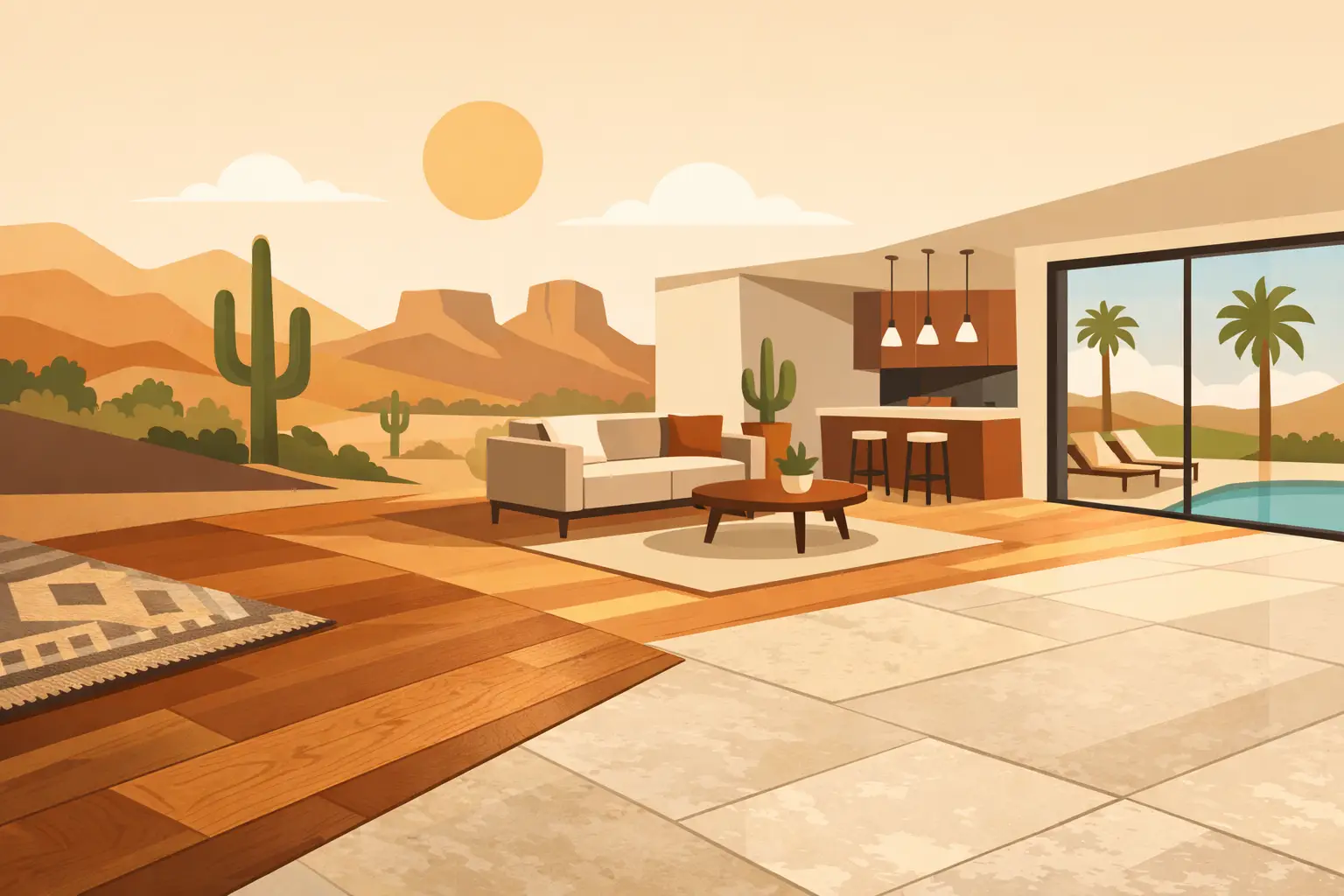
Think soft oak, honey brown, natural beige, light walnut, warm taupe, and sand-inspired shades. These colors work especially well in Arizona because they complement desert landscapes, stucco exteriors, stone details, and abundant natural light. They also give homeowners more flexibility with paint colors, cabinetry, and furnishings.
This does not mean every floor needs to be dark or dramatic. In fact, medium and light warm tones are often the practical choice for busy homes. They tend to hide fine dust, minor scratches, and everyday footprints better than very dark floors. A lighter floor can also make a smaller room feel more open, while a medium-tone floor brings definition to larger open-concept spaces.
Wood-Look Tile Still Leads in High-Traffic Areas
Wood-look porcelain tile remains one of the most reliable choices for Arizona homes. It brings the visual warmth of wood into rooms where moisture, heavy foot traffic, or frequent cleaning make real hardwood less practical. Kitchens, bathrooms, laundry rooms, entryways, and homes with pets often benefit from tile’s durability.
Today’s tile options are more convincing than earlier versions. Longer planks, natural grain variation, matte finishes, and carefully selected grout colors create a more realistic appearance. A quality installation matters just as much as the tile itself. Proper floor preparation, layout, spacing, and grout work help prevent an attractive material from looking uneven or feeling unfinished.
There are trade-offs to consider. Tile can feel harder and cooler underfoot than luxury vinyl or engineered wood, particularly in bedrooms and living areas. Rugs can help, as can thoughtful placement of tile in the rooms that need it most. For many households, wood-look tile is the best balance of long-term durability and low maintenance, but it is not automatically the best choice for every room.
Larger Tile Formats Create a Cleaner Look
Large-format tile is another trend with staying power. Fewer grout lines can make bathrooms, kitchens, and commercial interiors feel more open and easier to maintain. Popular formats include oversized rectangular tiles and large square tiles in stone, concrete, or subtle mineral-inspired patterns.
Installation is more demanding with larger tiles. The subfloor must be level, and the installer must use the correct setting materials and techniques to avoid lippage, which occurs when adjacent tile edges are not even. This is one area where careful site assessment and professional workmanship protect both the appearance and life of the finished floor.
Luxury Vinyl Offers Comfort and Versatility
Luxury vinyl plank and luxury vinyl tile continue to be popular for whole-home updates. The material can provide a softer feel underfoot than tile, comes in a wide range of wood and stone visuals, and is often a cost-conscious option when compared with high-end tile or hardwood.
Water-resistant and waterproof product lines make luxury vinyl especially appealing for households that want one continuous floor through living areas, hallways, kitchens, and bedrooms. It can also be installed faster than some traditional materials, depending on the condition of the existing floor and the selected product.
The product quality matters. Lower-grade vinyl may show wear sooner, dent under heavy furniture, or have less convincing texture and pattern variation. Homeowners should also consider the subfloor. A floor that is uneven, damaged, or affected by moisture needs correction before new flooring is installed. Covering an existing problem may save money at the beginning, but it can shorten the life of the new material.
Natural Texture Is Replacing Glossy Perfection
Highly polished floors have their place, but many homeowners are choosing finishes with more texture and a softer sheen. Matte wood-look tile, brushed wood, low-gloss vinyl, and stone-inspired surfaces make a room feel relaxed and grounded. They also tend to be more forgiving of small scratches, water spots, and dust than glossy finishes.
Natural variation is part of this shift. Flooring that includes subtle knots, grain movement, veining, or tonal changes can give a room more character than a perfectly uniform surface. The key is moderation. Too much variation can make a floor look busy, especially in a large open space. Reviewing several sample boards or tile pieces together gives a more accurate picture than choosing from one small sample.
Continuous Flooring Creates Better Flow
Open floor plans are still common across Mesa, Gilbert, Chandler, and surrounding communities. One of the most effective ways to make those spaces feel intentional is to reduce unnecessary flooring transitions. Using the same or closely coordinated material through the main living areas creates visual continuity from the entry to the kitchen and family room.
This approach can make a home feel larger, but it needs practical planning. Bathrooms and laundry rooms may require a more water-resistant surface. Bedrooms may benefit from a quieter, softer material. Where transitions are necessary, they should be placed at logical points, such as doorways, and finished with clean, durable trim rather than abrupt changes that interrupt the room.
For commercial properties, continuous flooring can also support a more professional appearance and simplify maintenance. The right product depends on traffic level, cleaning routines, accessibility needs, and the expected lifespan of the space.
Pattern Is Returning in Smaller, Intentional Ways
Neutral flooring does not have to be plain. Pattern is returning through herringbone layouts, checkerboard-inspired tile, subtle geometric designs, and decorative bathroom floors. These details work best when they are used with purpose rather than spread throughout the property.
A patterned tile floor can give a powder room, laundry room, entry, or small bathroom a distinct identity without overwhelming the home. In a larger room, a herringbone or angled plank layout can add movement while keeping the color palette calm. These designs usually require more material, more precise installation, and additional labor, so they should be included in the project budget from the start.
Choosing a Trend That Will Last
The best flooring does not need to chase every new design idea. It should work with your home’s architecture, your maintenance expectations, and the way your family or customers use the space. A beautiful floor that is difficult to maintain or poorly matched to the room can become a source of frustration quickly.
Before selecting material, consider sunlight exposure, moisture, pets, furniture weight, cleaning habits, and future plans for the property. It is also helpful to look at flooring samples in the actual room at different times of day. Arizona sunlight can make undertones appear much warmer or cooler than they do under showroom lighting.
D3 Construction helps homeowners evaluate those details before construction begins, from subfloor conditions and material selection to installation planning and final walkthrough. A clear scope and realistic budget allow the design to stay aligned with the practical work required beneath the surface.
The most lasting flooring trend is a floor chosen with care: one that supports your daily routine, complements the rest of your remodel, and gives you confidence every time you walk through the door.