
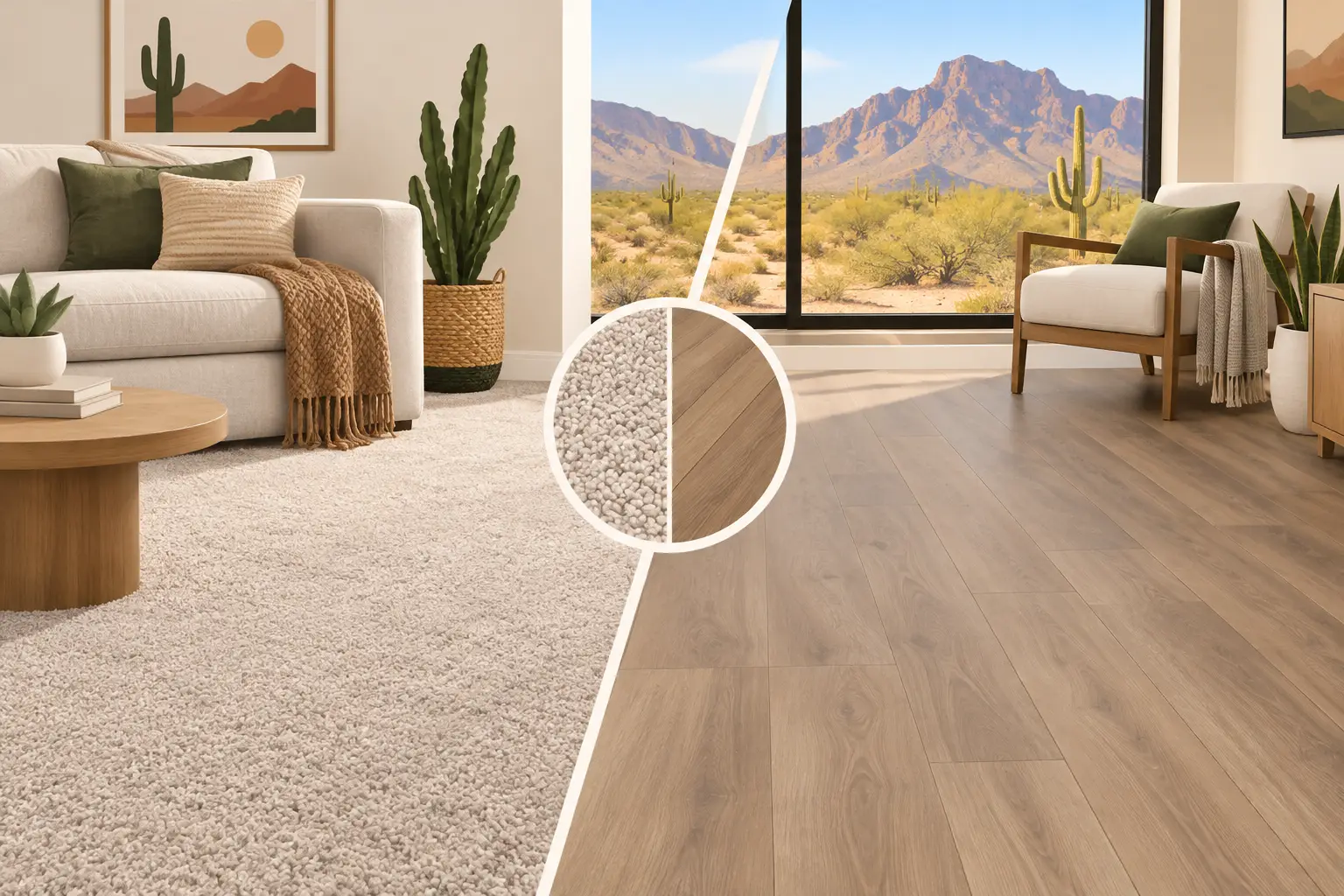
Carpet Versus Vinyl Plank for Arizona Homes
A flooring decision can change how a room feels every day. In a Mesa home, the carpet versus vinyl plank choice often comes down to more than color or style. It affects cleaning routines, indoor comfort, durability around pets and children, and how well the space handles Arizona dust, dry conditions, and the occasional plumbing leak.
Both materials can be a smart investment when selected for the right room and installed correctly. Carpet brings warmth and softness where comfort matters most. Vinyl plank brings a hard-wearing, low-maintenance surface that works especially well in active areas. The better choice depends on how you use the room, what condition the subfloor is in, and how long you expect the flooring to serve your household.
Carpet Versus Vinyl Plank: The Main Difference
Carpet is a soft floor covering installed over padding. Its greatest strengths are comfort, sound absorption, and a welcoming appearance in bedrooms, living rooms, and upstairs spaces. Modern carpet is available in stain-resistant fibers, low-pile styles, textured patterns, and colors that can complement nearly any remodeling plan.
Vinyl plank flooring, often called luxury vinyl plank or LVP, is a layered resilient flooring product designed to resemble hardwood or stone. It has a protective wear layer over a printed design layer and a stable backing. Many products are water-resistant or waterproof, making them a practical choice for kitchens, bathrooms, hallways, laundry rooms, and main living areas.
Neither material is automatically better throughout an entire home. A homeowner who wants a quiet, comfortable bedroom may prefer carpet. A family updating a kitchen and great room may get more value from vinyl plank because it can handle foot traffic, food spills, and frequent cleaning with less concern.
Comfort and Everyday Feel
Carpet changes the physical experience of a room. It is warm underfoot, softer for children playing on the floor, and more forgiving if something is dropped. It also reduces echo, which can make bedrooms, media rooms, and second-story spaces feel noticeably calmer.
That comfort does come with a maintenance trade-off. Carpet fibers can hold dust, pet hair, and allergens if they are not vacuumed regularly. Spills must be treated quickly, especially on lighter colors or high-pile carpet. Even high-quality carpet will eventually show traffic patterns in busy pathways.
Vinyl plank is firmer underfoot, but it is not as cold or hard as ceramic tile. Many homeowners appreciate the clean, continuous look it creates across an open floor plan. Some vinyl plank products include attached underlayment, and additional underlayment may be appropriate depending on the product and subfloor. This can improve sound control and provide a slightly more comfortable feel.
If softness is the priority, carpet has the advantage. If the goal is a smooth, easy-to-clean surface that supports daily activity, vinyl plank is usually the stronger fit.
Water, Spills, and Arizona Living
Water resistance is one of the clearest differences between these options. Vinyl plank performs well around routine spills, wet shoes, pet accidents, and bathroom moisture. Waterproof products can prevent water from damaging the plank itself, though standing water can still find its way through gaps or around the room perimeter. Proper installation and preparation remain essential.
Carpet is more vulnerable to moisture. A small spill can often be cleaned successfully, but a larger leak from a washing machine, supply line, or roof issue may affect the carpet pad and subfloor. If moisture remains trapped beneath the carpet, it can create odor concerns and may require removal and replacement.
For Arizona homes, this does not mean carpet should be avoided. It simply means it is usually best reserved for dry areas. Bedrooms, closets, home offices, and formal sitting rooms are common carpet locations. Vinyl plank is generally the more practical choice near exterior doors, kitchens, bathrooms, laundry rooms, and high-use family spaces.
Durability and Maintenance
Vinyl plank is built for busy households. A quality product with an appropriate wear layer can stand up well to pets, chairs, foot traffic, and regular mopping. It does not need refinishing, and most everyday care involves sweeping or vacuuming without a beater bar, followed by a manufacturer-approved cleaner when needed.
Not all vinyl plank is the same. Lower-grade products may scratch more easily, show seam issues, or have less realistic visual depth. Product thickness, wear-layer rating, locking system, and warranty should all be reviewed before making a final selection. Installation quality matters just as much. An uneven subfloor can lead to movement, visible imperfections, or premature wear.
Carpet durability depends heavily on fiber type, pile style, density, and padding. A dense, low-pile carpet may wear better in an active household than a plush style that feels luxurious but crushes more easily. Regular vacuuming and periodic professional cleaning help extend its useful life.
When comparing maintenance, vinyl plank is easier for most households. Carpet requires more ongoing attention, but it can still be a durable option in lower-traffic rooms when the material is selected carefully.
Style and Resale Considerations
Vinyl plank has become popular in Arizona remodeling because it gives homeowners a cohesive flooring surface across multiple rooms. Wood-look planks can complement modern, transitional, rustic, and traditional interiors without the maintenance demands of natural hardwood. Wide planks in natural oak, warm brown, and light neutral tones remain common choices because they pair easily with cabinets, paint, and furnishings.
Carpet offers design flexibility of a different kind. It can make a bedroom feel more finished and comfortable, and it provides a soft visual break from hard flooring in the rest of the home. Neutral carpet is often a sensible choice when preparing a home for resale, particularly in bedrooms where buyers expect warmth and comfort.
For resale, condition matters more than simply choosing one material over the other. Worn, stained carpet can work against a home’s appeal. So can poorly installed vinyl plank with uneven transitions or visible gaps. A professionally planned flooring update should look intentional, fit the home’s style, and transition cleanly between rooms.
Cost: Look Beyond the Material Price
Material cost is only one part of a flooring budget. Carpet may have a lower upfront price in some cases, but the project also includes padding, removal of existing flooring, furniture moving, subfloor preparation, trim work, and installation. Patterned carpet, premium fibers, and upgraded padding can raise the final investment.
Vinyl plank pricing also varies widely. Basic products may be budget-friendly, while thicker waterproof planks with stronger wear layers and realistic textures cost more. Subfloor leveling can be a significant factor because vinyl plank needs a flat, stable surface to perform correctly. Existing tile removal, moisture mitigation, and baseboard replacement can also affect the scope.
A detailed proposal should separate these items clearly. That allows homeowners to compare options based on the complete project, not just a sample price per square foot. It also helps prevent surprises once old flooring is removed and the actual condition of the subfloor is visible.
Which Rooms Should Get Carpet or Vinyl Plank?
Many successful remodels use both materials rather than forcing one product into every room. Vinyl plank is often the practical foundation for entryways, hallways, kitchens, dining rooms, living areas, bathrooms, and laundry rooms. It supports an open, connected look while making cleanup easier.
Carpet often works best in bedrooms, nurseries, upstairs rooms, and dedicated media spaces. In these areas, reduced noise and a softer surface can be more valuable than water resistance. A homeowner may also choose carpet in a home office if they want quieter acoustics for calls and meetings.
There are exceptions. A household with pets that frequently have accidents may prefer vinyl plank in bedrooms as well. Someone with mobility concerns may appreciate carpet’s traction in certain areas, while another homeowner may prefer vinyl plank because it allows easier movement for a wheelchair or walker. The right plan should reflect the people living in the home, not just a design trend.
Installation Quality Protects Your Investment
Flooring is only as reliable as the surface beneath it. Before installation, a contractor should inspect for uneven areas, moisture concerns, loose flooring, damaged subfloor sections, and transition details at doors, cabinets, and adjacent rooms. Skipping this step can create problems that no flooring product can solve later.
Professional installation also helps ensure proper expansion spacing for vinyl plank, appropriate carpet stretching, clean baseboard finishes, and safe transitions between materials. These details are easy to overlook during planning, but they affect how the finished project looks and performs over time.
For homeowners planning a broader renovation, flooring should be coordinated with painting, cabinetry, drywall repairs, and baseboard work. D3 Construction helps clients assess those connected details so the finished space feels complete rather than pieced together.
A good flooring choice should make daily life easier, not add another item to the maintenance list. Start with the rooms you use hardest, the comfort you want underfoot, and the condition of the existing floor. From there, a clear assessment and carefully selected materials can turn a simple flooring update into a lasting improvement for your home.