Best Flooring for Pets in Mesa Arizona Homes
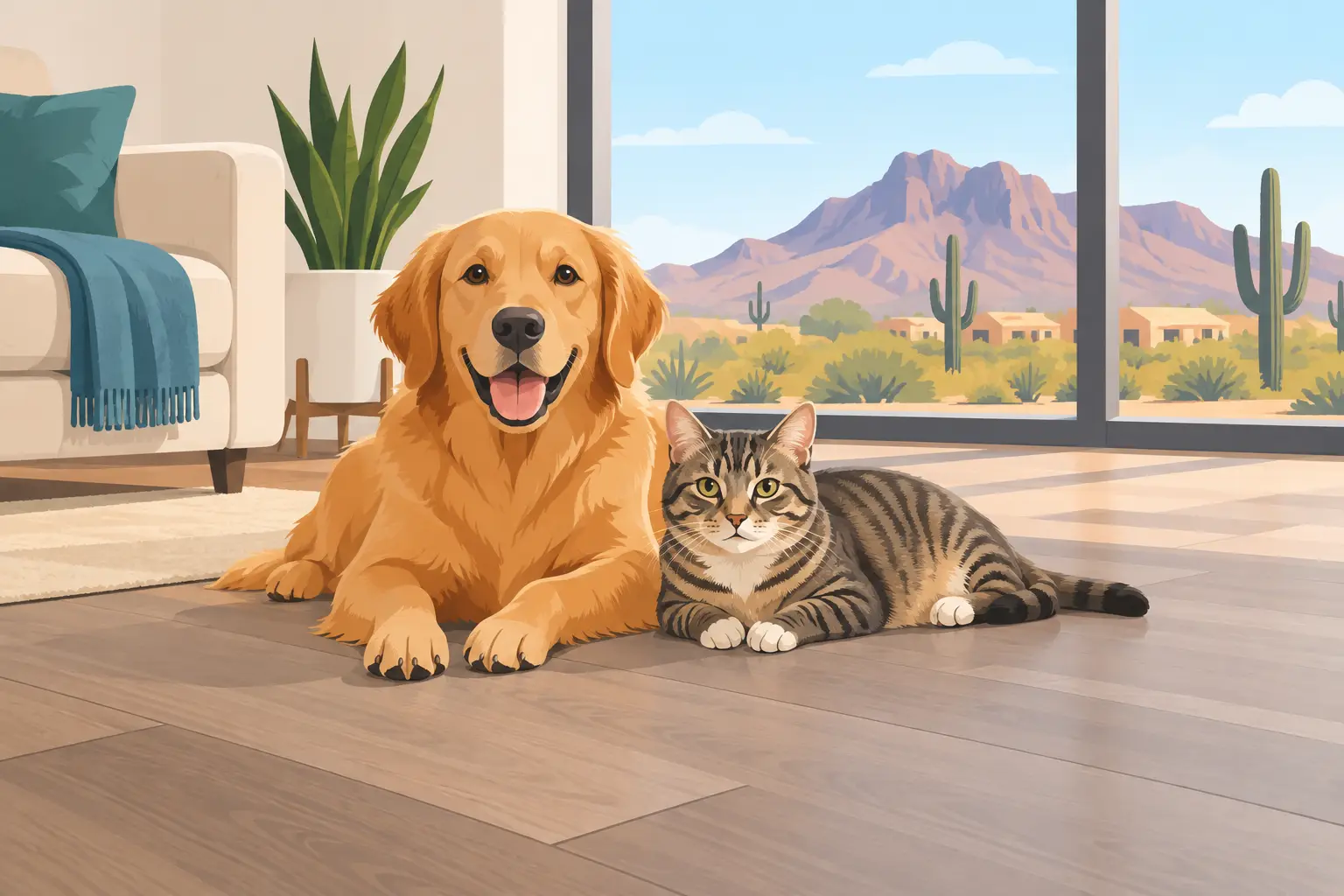
A new floor can look perfect on installation day, then face its real test when a dog races through the house after a walk or a cat decides one sunny window is its favorite scratching spot. For homeowners weighing the best flooring for pets, appearance matters, but daily durability matters more. The right material should handle claws, shed fur, occasional accidents, and frequent cleaning without making your home feel cold or overly commercial.
In Mesa and across the East Valley, flooring also needs to stand up to dry conditions, tracked-in dust, and intense sunlight. There is no single right answer for every household. A quiet indoor cat, a large active dog, and a busy home with several pets place very different demands on a floor. The best choice comes from balancing your pets’ habits, your room’s use, your maintenance preferences, and the look you want to achieve.
What Pet-Friendly Flooring Needs to Handle
Pet-friendly flooring is not simply flooring that resists scratches. It should be easy to clean, stable under changing temperatures, comfortable enough for pets to walk and rest on, and capable of holding up under routine use.
Scratch resistance is often the first concern, especially with medium and large dogs. However, texture and color can matter almost as much. A glossy, very dark floor may show light scratches, dust, and pet hair more readily than a matte finish in a natural mid-tone. A material can be durable yet still look worn quickly if its finish makes every mark visible.
Water resistance is equally important. Water bowls spill, paws come in wet, and accidents happen. Floors that allow moisture to reach the subfloor can develop odors, staining, or damage that is far more expensive to correct than the original spill. For homes with young pets, senior pets, or frequent visitors, easy cleanup should carry significant weight in the decision.
Best Flooring for Pets: Top Material Choices
Luxury Vinyl Plank Offers Practical Everyday Performance
Luxury vinyl plank is often one of the strongest options for homes with pets. Quality vinyl flooring is water-resistant or waterproof, easy to clean, and available in realistic wood and stone designs. It offers more warmth and cushion underfoot than tile, which can be appreciated by both homeowners and pets.
For active homes, select a product with a durable wear layer and a textured, low-sheen finish. Texture improves traction and helps disguise small scratches. It is also smart to ask about the flooring’s installation system and whether the manufacturer approves it for areas with direct sunlight. Arizona sun can be hard on some materials, particularly near large windows and patio doors.
Luxury vinyl is not indestructible. Sharp claws, dragged furniture, or heavy appliances can still leave marks, and thinner budget products may dent more easily. Still, for kitchens, living areas, hallways, and bedrooms, it provides a sensible balance of performance, comfort, and design flexibility.
Porcelain Tile Handles Water, Heat, and Heavy Traffic
Porcelain tile is one of the most durable flooring choices available. It does not absorb water easily, holds up well against claws, and performs reliably in warm Arizona conditions. It is especially well suited to entryways, kitchens, bathrooms, laundry rooms, and homes where dogs frequently come in from the yard.
Tile also gives homeowners a wide range of design choices, from clean large-format styles to wood-look planks and natural stone-inspired finishes. Choose a tile with enough texture to provide safe footing. Highly polished tile can become slippery for pets, particularly older dogs with limited mobility.
The trade-off is comfort. Tile is hard and can feel cool, which many Arizona homeowners enjoy for much of the year, but it offers little cushioning for joints. Area rugs with non-slip pads can create comfortable resting areas without sacrificing the practical benefits of tile. Grout selection also matters. A stain-resistant grout and professional installation help keep the finished floor easier to maintain over time.
Engineered Hardwood Can Work With the Right Expectations
Many homeowners want the warmth and character of real wood, and engineered hardwood can be a more practical choice than solid hardwood in a pet-friendly home. Its layered construction provides greater stability than traditional solid wood, and quality products can be refinished depending on the thickness of their wear layer.
That said, wood requires realistic expectations. Even durable species and tough factory finishes can show dents or surface scratches from active pets. A distressed or wire-brushed finish, natural color variation, and mid-tone stain can make everyday wear much less noticeable than a smooth, dark, high-gloss floor.
Engineered hardwood is best for households willing to keep pet nails trimmed, wipe up water promptly, and accept that a living floor develops character over time. It is generally not the first recommendation for rooms with frequent wet paws, water bowls, or accident concerns. In those spaces, vinyl or porcelain tile offers more peace of mind.
Laminate Is Worth Considering, With Careful Product Selection
Modern laminate has improved substantially in appearance and scratch resistance. It can be a cost-conscious way to achieve a wood-look floor, especially in bedrooms and lower-risk living spaces. Many products perform well against routine claw marks and are easy to sweep or vacuum.
Its main limitation is moisture. Standard laminate can swell or separate if water reaches its seams. Water-resistant and waterproof-rated laminate products offer better protection, but the details of installation still matter. Perimeter gaps, transitions, and seams need to be handled correctly to reduce the chance of water getting below the surface.
Laminate can be a good fit for pet owners with well-trained pets and a preference for a firm, wood-style floor. It may be less suitable for homes with repeated accidents or areas directly connected to pools, patios, or muddy outdoor spaces.
Flooring Materials That Need More Caution
Solid hardwood is beautiful and can last for decades, but it is more vulnerable to scratches, dents, and moisture damage than many alternatives. It may be the right choice for a design-focused home with smaller pets or a household prepared for regular maintenance, but it is rarely the lowest-stress option.
Carpet provides warmth and traction, yet it holds pet hair, dander, odors, and stains. It can still make sense in bedrooms or a dedicated upstairs area, particularly when paired with a quality stain-resistant carpet and padding. For primary living areas, however, hard-surface flooring is usually easier to maintain.
Natural stone varies widely. Some stones are durable, while others are porous and require regular sealing. Before choosing stone, consider how easily it may stain, whether its surface provides traction, and how it will feel underfoot for pets.
Match the Floor to the Room and Your Pet’s Routine
A whole-house flooring plan does not have to use only one material. A practical design might use porcelain tile in wet areas and near exterior doors, then continue luxury vinyl plank through the main living spaces. This approach can protect the areas that receive the most water, grit, and traffic while maintaining a cohesive appearance.
Consider where your pet eats, sleeps, enters the home, and spends the most time. A water-resistant floor near feeding stations and exterior entries prevents small issues from becoming repairs. In rooms where pets rest, comfort and traction may matter more than maximum hardness.
Color and finish deserve attention as well. Mid-tone floors with variation tend to hide fur, dust, and minor scratches better than solid dark or very light finishes. Matte finishes are generally more forgiving than glossy ones. These are small choices during planning, but they make a noticeable difference in how often a floor appears freshly cleaned.
Installation Quality Protects Your Investment
Even the best flooring material can disappoint when installation details are overlooked. Subfloor preparation, moisture testing, proper expansion gaps, transitions, and perimeter finishing all affect how a floor performs. This is particularly important when replacing flooring after a leak, pet damage, or an older flooring failure, since hidden moisture or uneven surfaces should be addressed before new material is installed.
Professional planning also helps homeowners coordinate flooring with baseboards, cabinetry, door clearances, and adjoining rooms. At D3 Construction, flooring decisions are approached as part of the larger home, with attention to the condition of the site, the intended use of the space, and the finished details that support a lasting result.
The right floor should make daily life easier, not turn normal pet ownership into a constant worry. Choose a material that fits your home as it is actually used, protect it with good installation and simple maintenance, and you can enjoy a space that welcomes both guests and four-legged family members.