Can Structural Damage Be Repaired? What to Know
A crack above a doorway, a floor that feels uneven, or a door that suddenly will not latch can make any property owner worry about the worst. So, can structural damage be repaired? In many cases, yes. The right repair depends on what is damaged, why it happened, and whether the condition is active or has stabilized.
Structural issues deserve prompt, informed attention because cosmetic fixes alone can hide a problem without correcting it. For homeowners and commercial property owners in Mesa and across the East Valley, a careful assessment is the first step toward protecting the building, the people who use it, and the investment behind it.
Can Structural Damage Be Repaired? Usually, With the Right Scope
Structural damage refers to problems affecting the parts of a building that carry or transfer weight. That may include the foundation, footings, load-bearing walls, beams, roof framing, floor framing, columns, masonry, or connections between these components. A repair can be highly effective when it addresses both the damaged material and the condition that caused the damage.
For example, replacing a cracked section of drywall is not a structural repair if movement in the framing or foundation caused the crack. Likewise, reinforcing a sagging beam may solve an immediate concern, but recurring roof leaks or termite damage must also be corrected to prevent further deterioration.
The good news is that many properties can be stabilized and restored without a complete rebuild. The scope may range from targeted framing repairs to foundation support, drainage improvements, replacement of damaged structural wood, or reinforcement of openings altered during a previous remodel. The earlier the issue is evaluated, the more repair options may be available.
Signs That Call for a Professional Assessment
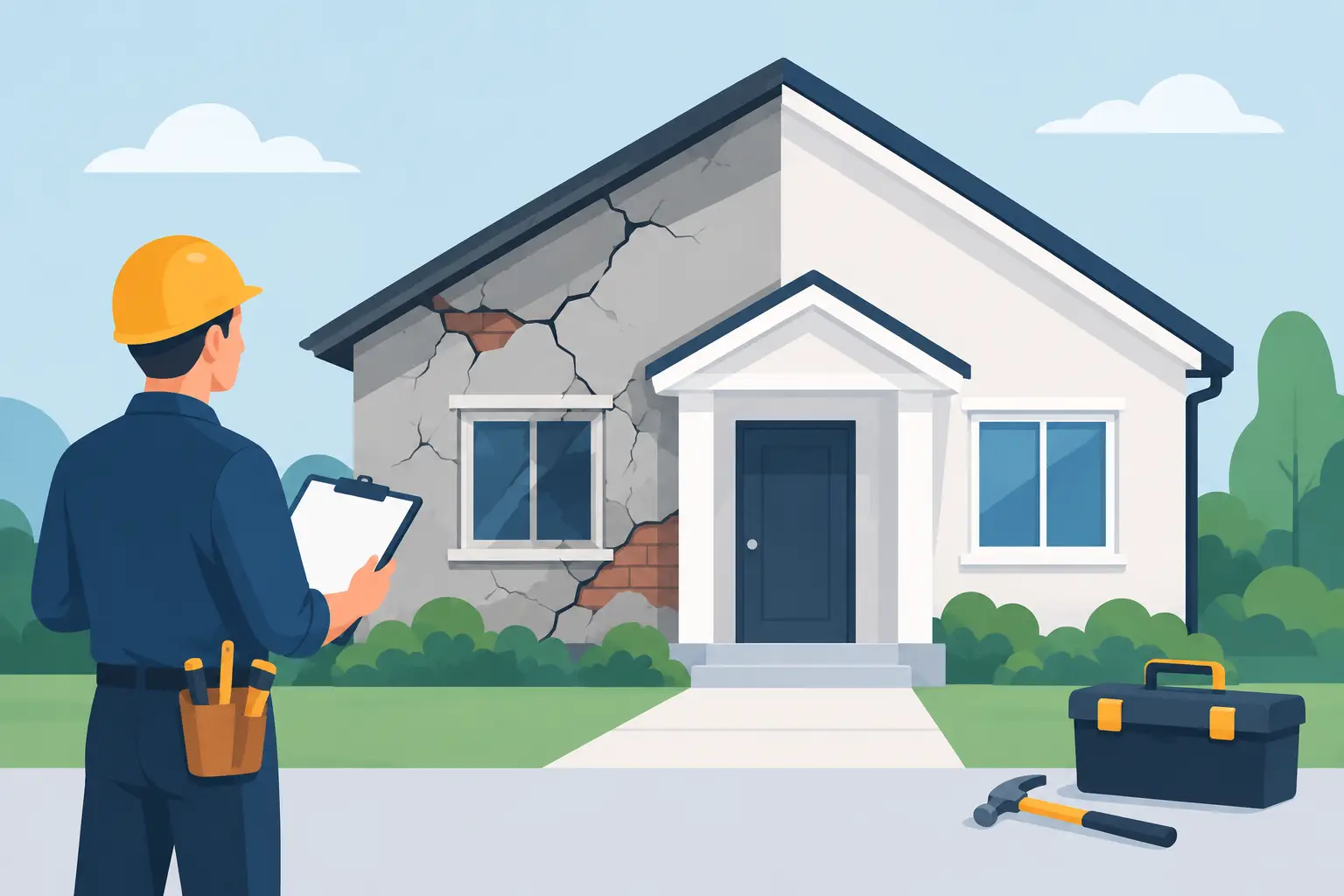
Not every crack means a building has a serious structural problem. Homes expand and contract with temperature changes, and minor drywall cracking can occur over time. What matters is the pattern, location, size, and progression of the damage.
It is wise to schedule an assessment when you notice several related warning signs, especially if they are getting worse. Common concerns include:
- Cracks that run diagonally from doors or windows, widen over time, or reappear after patching
- Doors and windows that stick, shift out of square, or will not close properly
- Sloping, bouncy, or visibly uneven floors
- Sagging ceilings, bowing walls, or separation where walls meet ceilings
- Cracked masonry, gaps around exterior trim, or visible movement near the foundation
- Water intrusion, wood rot, termite damage, or roof leaks near structural framing
A single symptom can have a simple explanation. Several symptoms in the same area deserve closer attention. A qualified contractor can review visible conditions, ask about the building’s history, and determine when additional evaluation by an engineer or other specialist is appropriate.
Why Structural Damage Happens in Arizona Properties
A repair plan is only as reliable as the diagnosis behind it. In the Phoenix-area climate, heat, seasonal monsoon rain, drainage conditions, soil movement, and moisture exposure can all affect a structure over time.
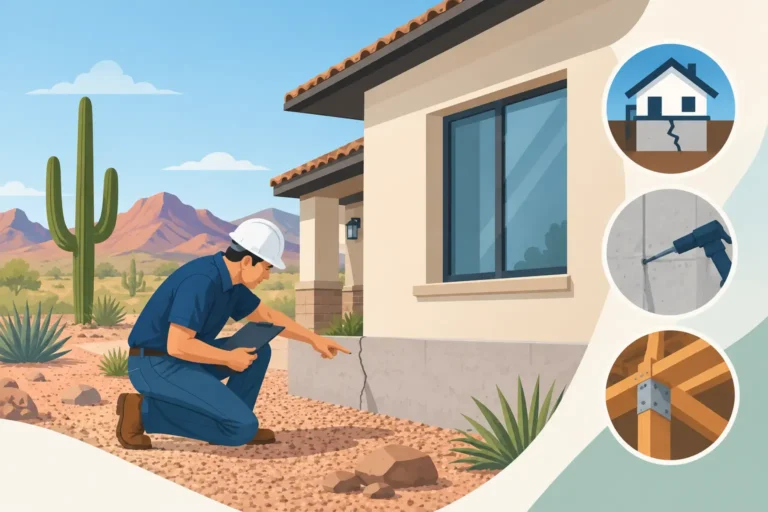
Foundation movement may occur when soil expands, contracts, washes out, or is not draining as intended. Water pooling near a foundation, leaking irrigation lines, poor grading, or roof runoff directed too close to the building can contribute to shifting conditions below the structure. In other cases, a long-term plumbing leak may weaken materials or affect the soil beneath a slab.
Framing issues often stem from moisture, insects, improper alterations, or insufficient support. A wall removed during an older renovation may not have received the beam or posts needed to carry the load above it. Roof leaks can weaken rafters, trusses, sheathing, or wall framing before the damage becomes visible inside.
Age can play a role, but structural trouble is not limited to older properties. Construction defects, unpermitted modifications, vehicle impacts, storm damage, and changes in how a commercial space is used can also create problems. The cause determines the repair approach, which is why a one-size-fits-all answer is rarely the right one.
What a Proper Structural Repair Process Looks Like
A dependable repair starts with a clear scope, not a quick patch. The contractor should inspect the affected areas and look beyond the most visible symptom. This may include reviewing the exterior, interior, attic, crawlspace where applicable, roofline, drainage paths, and signs of previous work.
If the situation involves significant movement, load-bearing components, or questions about the building’s design, engineering input may be necessary. An engineer can identify repair requirements and provide plans when required for safety or permitting. That may add time and cost upfront, but it can prevent an incomplete repair and provide confidence that the work is designed for the conditions at hand.
Once the scope is established, the work should be sequenced carefully. The team may first stabilize or shore the affected area, then repair or reinforce the structural components. Moisture sources, drainage problems, damaged roofing, or pest-related issues should be addressed as part of the overall plan. Only after the structure is stable should finishes such as drywall, flooring, paint, trim, or cabinetry be restored.
This order matters. Replacing finishes before the underlying issue is resolved can lead to repeat damage and unnecessary expense.
Common Structural Repair Solutions
The appropriate solution depends on the building and the cause of the problem. Foundation repairs may involve localized crack repair, underpinning, pier work, slab stabilization, or improvements to grading and drainage. Not every foundation crack requires major work, but cracks associated with active movement should be evaluated before cosmetic repairs begin.
For wood-framed structures, repairs may include replacing rotted or termite-damaged framing, sistering weakened joists, adding beams or posts, correcting improperly modified load-bearing walls, or reinforcing connections. A damaged roof structure may require replacement of compromised rafters, sheathing, or supporting framing after the leak source is corrected.
Masonry and block walls may need crack repair, reinforcement, rebuilding of localized sections, or correction of the movement that caused separation. In commercial spaces, repairs can also involve structural modifications to support new equipment, altered layouts, or changed occupancy needs.
The least disruptive option is not always the least expensive in the long run. A limited repair may be reasonable when damage is isolated and the cause has been corrected. More extensive work may be the better value when a property has ongoing movement, widespread water damage, or prior modifications that do not meet current needs.
Permits, Documentation, and Quality Control Matter
Structural work should not be treated like a cosmetic weekend project. Depending on the scope and local requirements, permits and inspections may be needed. Proper documentation can be valuable for future sales, insurance discussions, property records, and peace of mind.
A detailed proposal should explain what will be repaired, what conditions are included, what additional work could be discovered after opening walls or floors, and how finish restoration will be handled. Clear communication is especially important when structural repairs affect occupied homes, tenant spaces, kitchens, bathrooms, or business operations.
D3 Construction approaches repair projects with that level of planning: assess the property, define the scope, coordinate necessary steps, complete the work with attention to detail, and verify the finished result during a final walkthrough. A licensed, bonded, and insured contractor helps bring accountability to a process that can otherwise feel uncertain.
Do Not Wait for a Small Problem to Become a Larger One
Some structural damage develops slowly, which makes it easy to postpone. Yet moisture, movement, and deteriorated framing rarely improve without intervention. Waiting can allow a manageable repair to spread into finished surfaces, electrical systems, flooring, roofing, or adjacent structural areas.
At the same time, there is no benefit to assuming the worst based on one crack or one sticking door. The practical next step is a professional evaluation that distinguishes normal aging from an issue that needs repair. With a clear diagnosis, an appropriate scope, and quality workmanship, structural repair can restore both the strength of the building and confidence in the space you call home or work.