Why Are Your Light Bulbs Out? A Home Check
A hallway goes dark after a storm. The kitchen fixture flickers, then stops working. Or several light bulbs out at once leave you wondering whether you have a simple replacement job or a larger electrical concern. The pattern matters. A single failed bulb is usually routine; repeated failures, multiple dark fixtures, or a breaker that trips point to a problem worth investigating before it affects safety or daily use.
For Mesa-area homes and commercial properties, lighting problems can also show up in garages, exterior entries, patios, and older remodeled spaces where fixtures, switches, and circuits have changed over time. Start with the safe, visible checks. If the cause is not clear, treat the issue as a repair need rather than repeatedly resetting a breaker or installing new bulbs.
When Light Bulbs Out Means More Than a Bad Bulb
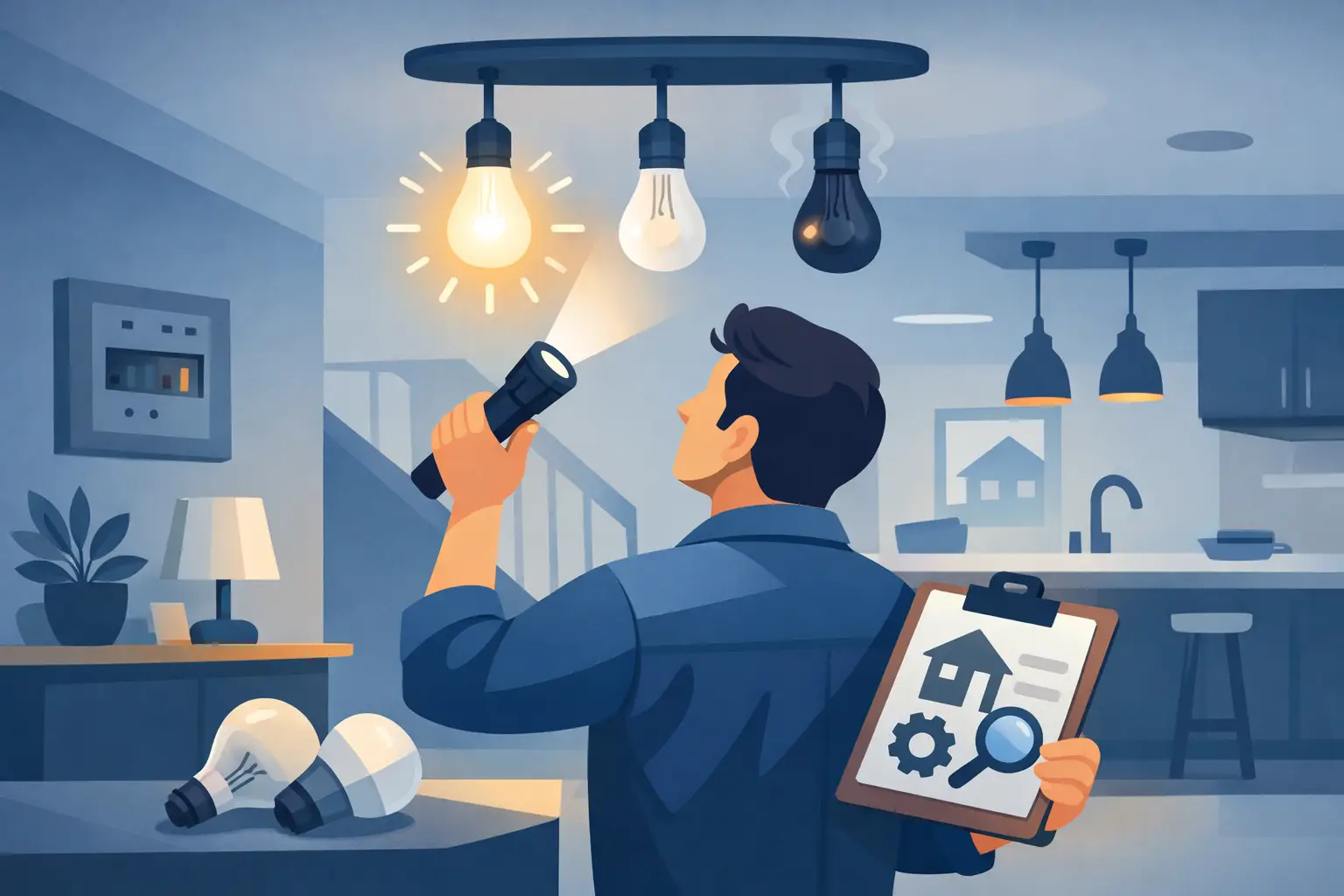
The first question is simple: is one bulb out, one fixture out, or an entire area out? Those three situations have different likely causes.
When one bulb stops working while the rest of the fixture operates normally, the bulb itself is the most likely issue. LEDs last far longer than incandescent bulbs, but they still fail. Heat buildup in enclosed fixtures, poor-quality bulbs, vibration from a ceiling fan, and power fluctuations can shorten their usable life.
If every bulb in one fixture is out, check whether the wall switch is on and whether the fixture has a separate pull chain, dimmer, remote, or smart control that may need attention. A loose bulb, a tripped breaker, or a tripped GFCI outlet can also shut down a fixture. In bathrooms, garages, laundry rooms, kitchens, and exterior areas, GFCI protection is especially common.
When several lights in the same room or nearby rooms stop working, the concern moves beyond the bulb. The circuit may be overloaded, a breaker may have tripped, a GFCI may have interrupted power, or a switch, fixture connection, or wiring component may have failed. That does not automatically mean a major repair is needed, but it does mean the cause should be identified rather than guessed at.
Safe Checks to Make Before Calling for Repair
Begin with the least invasive steps. Turn the wall switch off before touching a bulb, especially if the fixture is hot. Let recently used bulbs cool completely before removing them.
Try a new bulb that is compatible with the fixture’s wattage rating and socket type. For LED replacements, make sure the bulb is rated for use with any dimmer or enclosed fixture involved. A standard LED installed in a tightly enclosed light can overheat and fail earlier than expected. Similarly, a non-dimmable LED on a dimmer switch may flicker, buzz, or stop working properly.
Next, check the electrical panel. Look for a breaker that is visibly in the middle position or switched off. Reset it only once by moving it fully to the off position and then back on. If it trips again, leave it off. A repeatedly tripping breaker is doing its job by responding to a potential overload, short, damaged fixture, or wiring issue.
If the affected area is near water or outdoors, look for a GFCI outlet with test and reset buttons. One GFCI can protect other outlets and lighting downstream, so the reset location may not be in the same room. Reset it only if there is no sign of moisture, damage, or overheating.
Do not remove outlet covers, open a fixture junction box, or handle exposed wiring to search for the problem. Electrical work can involve hidden connections and circuit conditions that are not visible from the room. The goal of these checks is to narrow down the issue safely, not to turn a lighting repair into a larger hazard.
Common Reasons Bulbs and Fixtures Keep Failing
A fixture that burns through bulbs every few months is asking for a closer look. In some cases, the solution is as simple as using the correct bulb. In others, the fixture or electrical connection needs repair or replacement.
Wrong Bulb Type or Wattage
Every fixture has a maximum wattage rating. Exceeding it creates excess heat, which can damage the socket, wiring insulation, and fixture components. Even when switching to LEDs, choose bulbs designed for the fixture and avoid assuming that every LED performs the same way.
Enclosed ceiling lights, recessed cans, and outdoor fixtures require bulbs that can manage heat in restricted spaces. A bulb that works well in an open table lamp may fail much sooner in a sealed porch fixture or recessed kitchen light.
Aging Sockets, Switches, or Fixtures
A loose or worn socket may not make reliable contact with the bulb. You may notice intermittent operation, flickering when a door closes, or a bulb that only works when tightened to a certain point. Switches can wear out as well, particularly in high-use rooms such as kitchens, bathrooms, offices, and commercial corridors.
Older fixtures may also have brittle insulation, corroded components, or connections that no longer provide dependable performance. Replacing an outdated fixture can improve lighting quality and address an issue that new bulbs alone will not solve.
Loose Connections and Circuit Issues
Flickering lights should not be ignored, particularly when multiple fixtures flicker together. A loose connection can create heat and may worsen over time. If lights dim when an appliance starts, that can indicate a circuit load concern or an issue that requires a qualified electrical evaluation.
In a remodel, lighting changes should be planned with the full electrical load in mind. Adding recessed lighting, pendant lights, under-cabinet lighting, bathroom ventilation, or exterior security lighting may require circuit updates, new switches, or coordinated electrical work. Proper planning protects both the finished appearance and the long-term reliability of the space.
Arizona Heat, Moisture, and Exterior Exposure
Mesa’s heat can be hard on exterior fixtures, garage lighting, and lights installed in enclosed soffits or patio covers. Sun exposure can degrade plastic lenses and seals. Dust, insects, moisture from irrigation, and monsoon weather can enter fixtures that are no longer properly sealed.
If an exterior light repeatedly fails after bulb replacement, inspect it visually for cracked housings, rust, water intrusion, or discoloration. Do not continue using a fixture that shows signs of burning, melted parts, or water inside the lens. A weather-rated replacement installed correctly is often the more durable answer.
Warning Signs That Need Professional Attention
Some lighting problems should move quickly from troubleshooting to repair. Turn off the affected circuit and arrange an inspection if you notice a burning smell, sizzling or crackling, smoke, scorch marks, a warm switch plate, melted plastic, or a breaker that continues to trip.
The same applies if a fixture flickers throughout the home, lights suddenly become unusually bright or dim, or a loss of power affects more than one circuit. These conditions can signal a problem beyond a single fixture and should not be handled through repeated breaker resets or bulb changes.
For commercial properties, lighting failures can affect safety, tenant comfort, accessibility, and operations. Dark stairways, entries, parking areas, restrooms, and workspaces deserve prompt attention. A clear repair scope helps property managers address the immediate issue while identifying whether aging fixtures, damaged finishes, or broader modernization should be included in the project.
Plan Lighting Repairs as Part of Property Improvement
A lighting problem can be an opportunity to correct more than a burned-out bulb. During a kitchen remodel, for example, homeowners often improve task lighting at counters, add layered ceiling lighting, and replace dated fixtures that no longer fit the room. Bathroom upgrades can include properly located vanity lights, moisture-appropriate fixtures, and better ventilation planning. Exterior renovations may call for durable entry, patio, and security lighting that improves both appearance and visibility.
The right choice depends on the condition of the property, the room’s use, the budget, and whether the issue is isolated or recurring. D3 Construction can help homeowners and property managers assess how lighting-related repairs fit into a larger renovation or improvement plan, with a clear scope and accountable project coordination.
If replacing a bulb solves the problem, you can move on with confidence. If the same lights keep failing, the breaker trips, or the fixture shows signs of damage, stop treating it as a bulb problem. Addressing the cause early protects your property and helps keep every room, entry, and work area safely lit.