
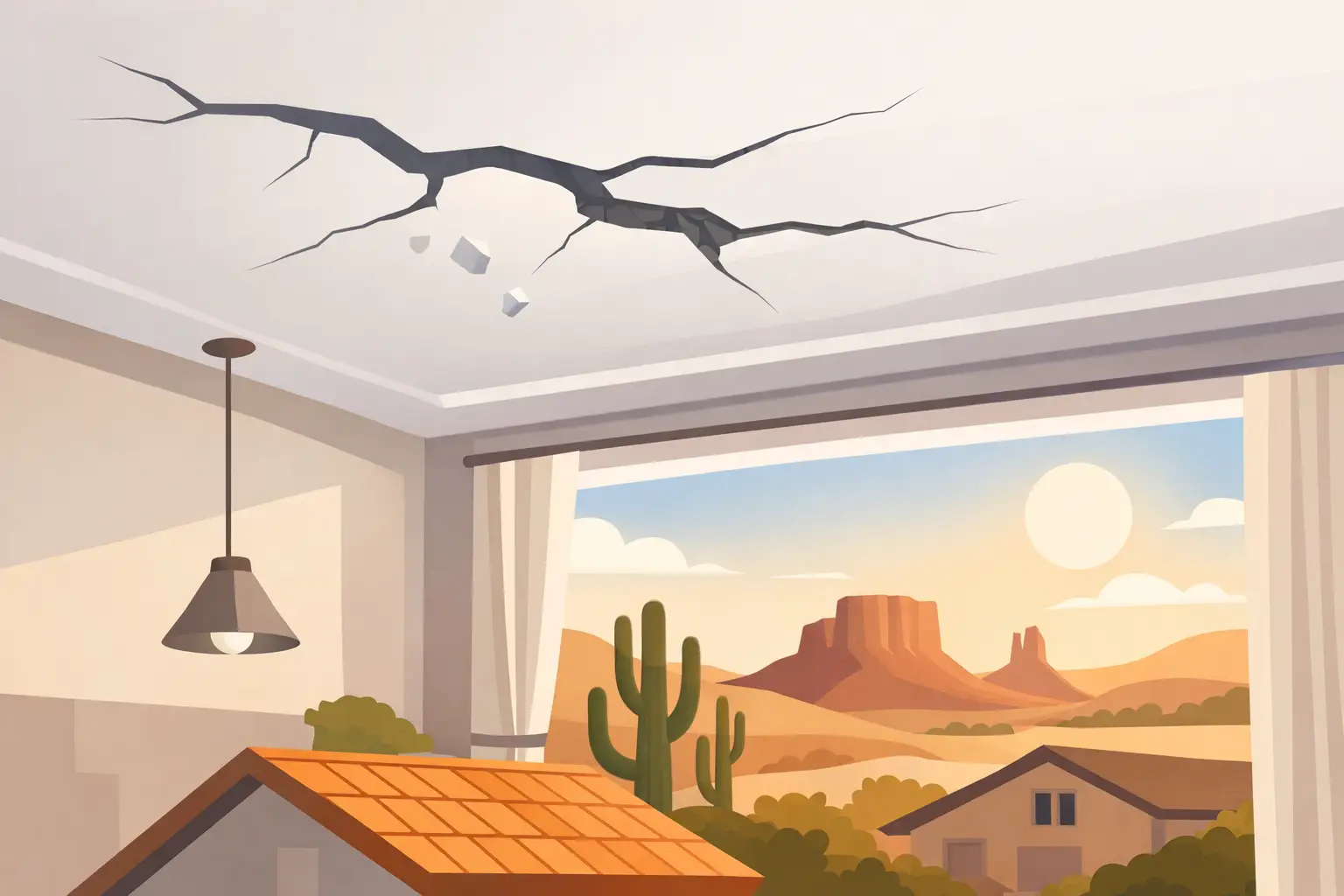
What Causes Ceiling Cracks in Arizona Homes?
A thin line across a ceiling can be nothing more than aged drywall compound. A crack that suddenly widens after a monsoon, appears with a sagging area, or returns after being patched deserves a closer look. Understanding what causes ceiling cracks helps Mesa-area homeowners separate common cosmetic movement from signs of moisture, framing, or foundation issues that need professional attention.
What Causes Ceiling Cracks? Start With Movement
Most ceiling cracks develop because different parts of a house move at different rates. Drywall is rigid, while wood framing, roof trusses, foundations, and the soil beneath a home all respond to changes in temperature, moisture, and load. That movement places stress on drywall joints and fasteners, often creating cracks where ceiling panels meet or where a ceiling meets a wall.
In Arizona, seasonal conditions can make that movement more noticeable. Long periods of heat and dry air can cause materials to expand, contract, and lose moisture. Then summer monsoons can quickly change soil moisture around the home. A properly built home is designed to accommodate some normal movement, but drywall finishes can still show it first.
The location, shape, and timing of a crack tell a more useful story than its size alone. A qualified assessment looks at the ceiling surface, nearby walls, attic framing, roof condition, and any evidence of water intrusion before recommending a repair.
Common Reasons Ceilings Crack
Normal settling and drywall joint movement
Newer homes commonly experience minor settling during their first few years, but older homes can shift as well. Hairline cracks along a straight drywall seam are often caused by normal movement at the taped joint. Cracks may also form at inside corners where ceilings and walls meet, especially in rooms with long, uninterrupted ceiling spans.
These cracks are usually cosmetic when they remain narrow, do not spread, and are not accompanied by wall cracks, sticking doors, or uneven floors. Even so, a cosmetic repair should be done correctly. Simply covering a moving crack with spackle can leave the same line visible again within months.
Temperature changes and truss uplift
Roof trusses can move differently from the walls below them. During cooler periods, the lower portions of trusses may be affected by warmer, drier air inside the home while upper portions remain closer to attic conditions. This can cause a ceiling edge to pull slightly away from an interior wall, creating a crack near the corner.
Truss uplift is usually not a foundation failure, but it takes the right repair approach. A contractor may need to assess attic conditions and use a detail that allows for future movement rather than rigidly fastening drywall in a way that recreates the problem.
Moisture from roof, plumbing, or HVAC leaks
Water damage is one of the most urgent causes of ceiling cracks. A roof leak, failed flashing, plumbing leak, condensation issue, or air-conditioning drain problem can soften drywall and weaken the material around seams. The ceiling may discolor, bubble, sag, feel soft, or develop a widening crack.
In the East Valley, roof issues sometimes become visible during or shortly after heavy monsoon rain. A small stain may be old and dry, but it should not be dismissed without checking the source. Repairing and repainting the ceiling before the leak is corrected only hides the evidence temporarily and can allow damage, mold growth, or wood deterioration to continue.
Foundation or soil movement
Arizona soils vary widely by neighborhood and property. Some soil types expand when wet and shrink as they dry, while poor drainage can concentrate water near a foundation. Foundation movement can show up as diagonal cracks near doors and windows, cracks in both walls and ceilings, gaps at trim, or doors that no longer latch correctly.
A ceiling crack by itself does not prove a foundation problem. However, a crack that continues through the ceiling and down a wall, grows over time, or appears alongside several other changes should be evaluated rather than patched. The right next step depends on the findings. It may involve drainage correction, structural evaluation, drywall repair, or a combination of services.
Improper installation or previous repairs
Drywall can crack when panels were not properly fastened, joints were poorly taped, framing was uneven, or the wrong materials were used for a repair. Fastener pops – small circular bumps or cracks where screws or nails push through the finish – can happen as lumber dries and shifts slightly behind the drywall.
Previous repairs can also fail if the underlying movement was never addressed. A long crack that has been filled repeatedly may need the joint opened, reinforced with the appropriate tape and compound, and refinished after the cause has been checked.
Excess weight or structural changes above
Ceilings can crack when framing is stressed by a roof issue, added loads, altered supports, or damage in the attic. This is less common than drywall joint movement, but it is more serious. A sagging ceiling, a crack that opens noticeably, or a ceiling that appears bowed should be treated as a prompt inspection issue.
Do not climb into an attic or pull on a damaged ceiling to investigate if the area looks unstable. Keep people and belongings clear of the space until a qualified professional can determine whether the problem is limited to drywall or involves framing, roofing, or another building system.
When a Ceiling Crack Needs Prompt Attention
Many small cracks can wait for a planned repair, particularly if they have not changed for a long time. Others call for faster action because the ceiling may be signaling active water damage or structural movement.
Arrange an inspection promptly if you notice four or more concerning conditions, including:
- A sagging, bowed, soft, wet, or stained ceiling area
- A crack wider than a hairline, especially one that is growing
- Cracks paired with sticking doors, uneven floors, or wall separation
- A crack that appears after a storm, plumbing leak, or roof damage
- Loose drywall, falling texture, or visible fasteners across a broad area
If water is actively dripping or the ceiling is bulging, move furniture away from the area and address the leak source as quickly as possible. Turning off water to a suspected plumbing leak may prevent additional damage when it is safe to do so.
How a Professional Diagnoses the Cause
A lasting repair begins with identifying what moved and why. The inspection should consider the crack pattern, the condition of the drywall, nearby wall surfaces, attic framing where accessible, roof and plumbing history, and drainage around the property. For commercial buildings, the review may also include rooftop equipment, ceiling systems, and any recent tenant improvements.
There is a practical trade-off here: not every narrow drywall crack requires an extensive structural investigation, and not every crack should receive a quick cosmetic patch. The scope should match the evidence. A stable drywall seam may need a careful finish repair and paint blending. A water-damaged ceiling requires leak correction, removal of compromised material where necessary, drying, repair, and final finishing. Structural concerns may require further evaluation before interior work begins.
For homeowners who prefer one accountable partner, D3 Construction can assess the visible damage, explain the proposed scope clearly, and coordinate appropriate repair work with attention to the finished surface as well as the underlying condition.
Repairing Ceiling Cracks the Right Way
Once the cause is understood, the repair process can be straightforward. For ordinary seam cracks, a contractor may remove loose material, reinforce the joint, apply compound in properly feathered layers, match the existing texture, prime, and paint. The goal is not only to hide the crack but also to create a finish that blends with the surrounding ceiling.
Water-damaged drywall often needs a more involved repair. Damp or weakened material may need to be removed after the leak is stopped and the area is fully dried. Replacing only what is necessary can control cost, but the repaired area must still be secured, finished, textured, and painted to look consistent with the room.
If movement is ongoing, repairs should follow correction of the underlying issue. That may mean improving drainage, addressing roof or plumbing defects, adjusting an attic-related condition, or obtaining structural guidance. Skipping this step can turn a small repair into a repeating expense.
Preventing New Ceiling Cracks
No home remains completely motionless, but maintenance reduces the conditions that turn minor movement into visible damage. Watch for roof wear before monsoon season, keep gutters and roof drainage components functioning where installed, and direct water away from the foundation. Address plumbing leaks quickly, maintain HVAC equipment, and avoid storing excessive weight on ceiling framing or truss systems.
Most of all, pay attention to change. A crack that stays the same may be a finish issue. A crack that spreads, stains, sags, or appears with other symptoms is useful information about the home and deserves a careful response. Addressing it early protects both the appearance of the space and the soundness of the work behind it.