
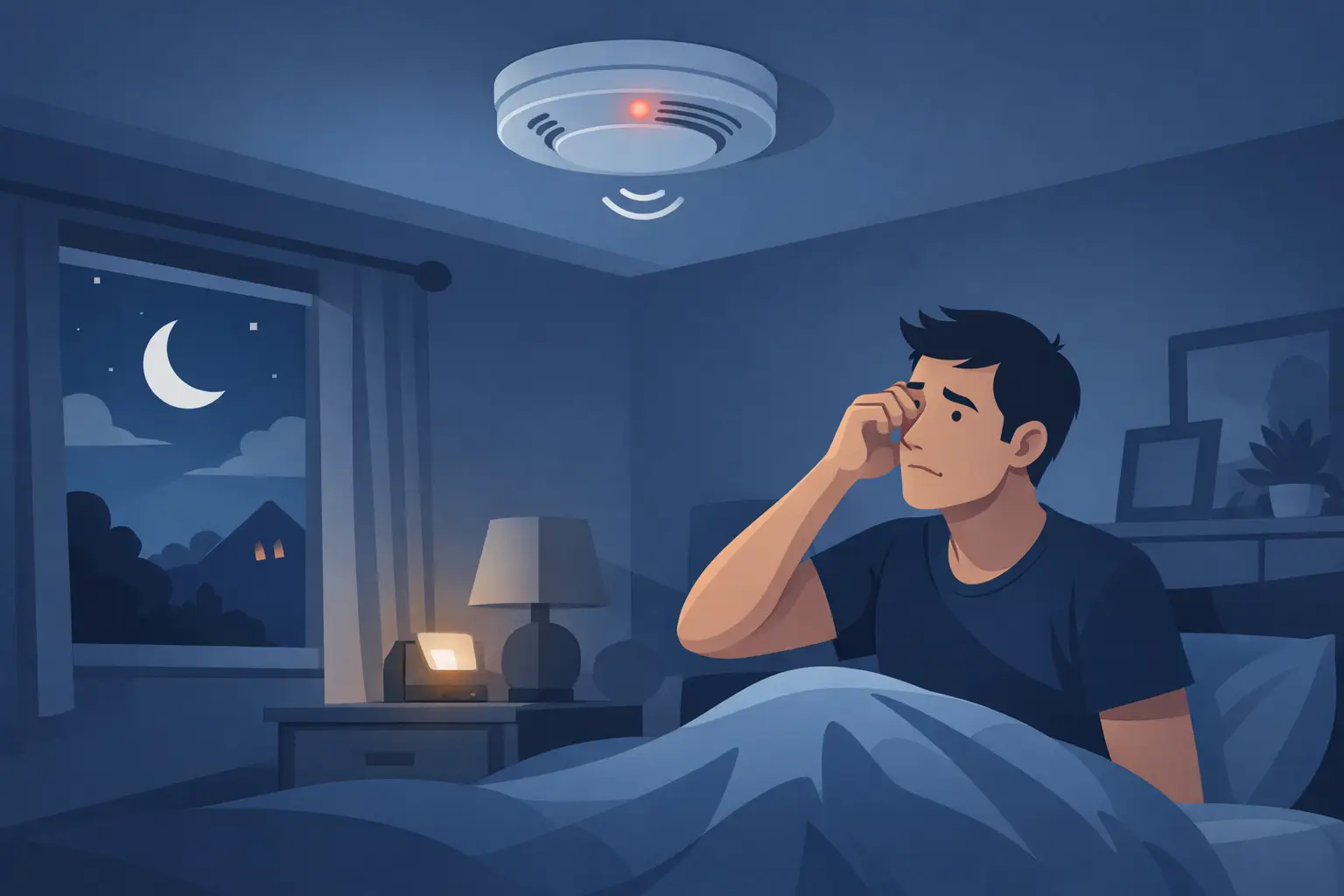
Why Is Your Smoke Detector Chirping at Night?
A smoke detector chirping at 2:00 a.m. can make a quiet home feel suddenly urgent. The sound is designed to get your attention, but a chirp does not always mean there is a fire. In most cases, it points to a low battery, dust inside the unit, a power issue, or a detector that has reached the end of its service life. The key is to investigate it promptly without disabling a safety device your household depends on.
For homeowners in Mesa and across the East Valley, heat, dust, seasonal monsoon outages, and changing indoor temperatures can all contribute to smoke detector issues. A few careful checks can often identify the cause. If the alarm continues, multiple units behave unpredictably, or you are unsure how your system is wired, a qualified electrician is the safest next step.
What Smoke Detector Chirping Usually Means
A single brief chirp every 30 to 60 seconds is different from a full smoke alarm. A full alarm is loud and continuous or follows the specific evacuation pattern programmed by the manufacturer. Treat that sound as a possible emergency: get everyone outside and call 911 if there is any sign of smoke, fire, or carbon monoxide exposure.
A chirp is generally a maintenance signal. The most common cause is a low battery, even on a hardwired smoke detector. Hardwired models are connected to your home’s electrical system, but many still contain a backup battery for power outages. When that battery weakens, the detector may chirp even though the home has power.
The exact meaning can vary by manufacturer and model. Some combination smoke and carbon monoxide alarms use different beep patterns or light colors to distinguish between a low battery, an end-of-life warning, and a sensor problem. Before assuming the cause, check the label on the back or side of the unit and consult its printed instructions if available.
Start With the Battery and Reset Process
If the detector uses a replaceable battery, install a fresh battery of the type specified by the manufacturer. Avoid mixing old and new batteries, using a different battery chemistry than recommended, or relying on a battery that has been sitting loose in a drawer for years. A new, manufacturer-approved battery gives you the best chance of solving the issue on the first attempt.
After replacing the battery, close the battery compartment firmly. Many smoke alarms chirp because the drawer is not fully latched or the battery is not seated correctly. Then press and hold the test button for about 15 to 20 seconds. This can clear residual electrical charge and reset the unit after a battery change.
For a hardwired detector, turn off power at the appropriate breaker before removing the unit from its mounting bracket. Replace the backup battery, reconnect the detector, restore power, and use the test button. If you are not comfortable working around electrical connections, do not force the process. An electrician can inspect the device and its wiring without risking damage to the alarm or the electrical box.
Why the Chirp May Continue After a New Battery
It is frustrating to replace a battery only to hear the same chirp minutes later. First, confirm that the sound is coming from the detector you serviced. In interconnected homes, sound can bounce through hallways and ceilings, making the source difficult to pinpoint. Stand near each unit and listen carefully, or have one person listen while another checks each detector.
If the chirp is coming from the same unit, reset it again and inspect the battery compartment for corrosion, loose contacts, or a damaged latch. A detector with a sealed 10-year battery cannot accept a replacement battery. Once that sealed battery nears the end of its life, the entire alarm needs to be replaced.
Dust, Insects, and Arizona Heat Can Affect Detectors
Smoke detectors are sensitive by design. Dust, drywall debris, paint overspray, small insects, and cobwebs can interfere with the sensing chamber and trigger a chirp or false alarm. This is especially common after remodeling work, ceiling repairs, flooring installation, or any project that creates airborne dust.
Turn off power to hardwired units before cleaning. Then use the soft brush attachment on a vacuum around the vents and exterior openings. A can of compressed air may help remove light debris, but keep the nozzle at a distance and follow the alarm manufacturer’s instructions. Do not spray cleaners, water, or insecticide into the detector. Those products can damage the sensor.
Arizona’s high temperatures can also expose weak batteries and aging equipment. Detectors installed near garages, unconditioned storage areas, bathrooms, kitchens, or poorly ventilated hallways may experience more temperature swings, humidity, or airborne particles than units in central living spaces. The location may be part of the problem, but do not relocate an alarm without considering local code requirements and the home’s overall fire protection plan.
Check the Age of Every Smoke Alarm
Most smoke alarms should be replaced after 10 years, although the manufacturer’s date and instructions should always control. Look on the back of the detector for a manufacture date or replacement date. If your home was built or remodeled more than a decade ago and the alarms have never been updated, a chirp may be a useful warning that the system is overdue for replacement.
Aging alarms can chirp because their internal sensors are no longer reliable. Replacing only the noisy unit may solve the immediate problem, but it is wise to check the age of every alarm in the house. Devices installed at the same time often reach end of life around the same time.
When replacing hardwired, interconnected detectors, compatibility matters. A new alarm may physically fit an existing mounting plate but still be incompatible with the wiring harness or communication system. Some homes also have smoke and carbon monoxide alarms tied together. A professional can identify the system and recommend replacement units that work together properly.
Do Not Ignore Carbon Monoxide Alarm Signals
Many modern units combine smoke detection and carbon monoxide detection. Carbon monoxide is colorless and odorless, and exposure can cause headache, dizziness, nausea, confusion, or loss of consciousness. A carbon monoxide alarm pattern is not a routine chirp to silence and revisit later.
If your alarm indicates carbon monoxide, move everyone outside into fresh air immediately and call 911 or your local fire department from outside. Do not reenter until emergency professionals say it is safe. If no one has symptoms but you are uncertain what the alarm pattern means, treat the situation cautiously and verify the model’s instructions from a safe location.
When a Smoke Detector Chirping Needs Professional Help
A battery change and gentle cleaning are reasonable homeowner maintenance tasks. Beyond that, the issue may involve the home’s electrical system, the interconnect wiring, or an improperly installed device. Schedule professional help if the detector keeps chirping after a correct battery replacement and reset, if hardwired alarms lose power, if several alarms chirp or alarm together, or if you notice loose wiring, discoloration, or damage around the ceiling box.
Professional attention is also worthwhile after a renovation. Contractors should protect smoke alarms from heavy dust and reinstall or replace them correctly if ceiling work affects their placement. Smoke alarm coverage, location, and electrical requirements can be affected by additions, room conversions, and major remodeling projects. A careful review helps ensure that a finished space is not only attractive and functional, but also properly protected.
Never remove a battery and leave the detector disabled just to stop the noise. If you need temporary quiet while troubleshooting, work through the reset instructions, replace an end-of-life unit promptly, or have a qualified professional inspect it. That small chirp is inconvenient, but restoring dependable fire and carbon monoxide protection is the result that matters most.