
Laminate Versus Vinyl Flooring for Your Home
A floor can look nearly perfect in a showroom and still be the wrong choice for a busy kitchen, a bathroom with daily moisture, or a sun-filled Arizona living room. When comparing laminate versus vinyl flooring, the better option depends less on a single “best” material and more on how the room is used, what lies beneath it, and how long you expect the finish to perform.
Both flooring types offer attractive wood and stone looks at prices below many natural materials. Both can also be installed efficiently in many remodeling projects. Their differences become clearer when moisture, comfort, durability, repair options, and product quality are considered before installation begins.
Laminate Versus Vinyl Flooring: The Core Difference
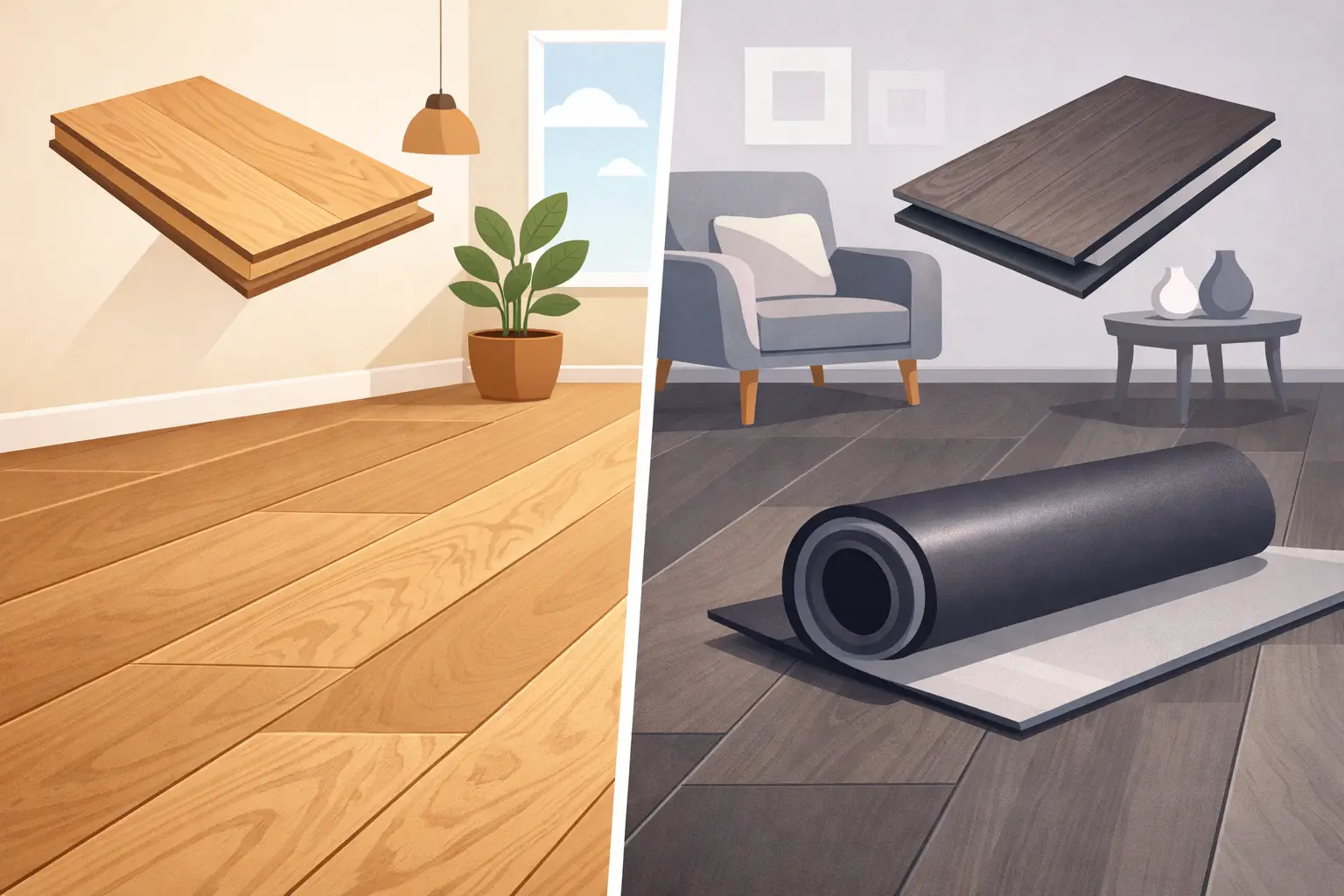
Laminate flooring is built in layers. It typically has a dense fiberboard core, a printed design layer, and a tough clear wear layer on top. Modern laminate can closely resemble hardwood, including the texture and grain variation that make a room feel warm and finished.
Vinyl flooring is a synthetic, water-resistant material. It is commonly available as luxury vinyl plank, luxury vinyl tile, sheet vinyl, and rigid-core products. Many homeowners choose vinyl because it can create a convincing wood or tile appearance while handling everyday spills better than traditional laminate.
The central difference is the core. Laminate’s fiberboard core can swell or become damaged if water reaches the seams or sits on the surface too long. Vinyl is generally much more forgiving around water. That does not mean every vinyl product is identical, however. Thickness, wear-layer quality, locking systems, subfloor preparation, and installation all affect the finished floor’s performance.
Choosing for Arizona Kitchens and Bathrooms
For bathrooms, laundry rooms, and other spaces where water exposure is routine, vinyl is usually the more practical choice. A dropped towel, wet feet, plumbing leak, or overflowing sink can create problems for laminate if moisture reaches the core. Waterproof vinyl plank or tile gives homeowners a stronger margin of protection in these areas.
Kitchens require a more balanced decision. Laminate can work well in a kitchen that is carefully maintained and has limited water exposure. It offers a firm, refined walking surface and often provides detailed wood visuals. Still, kitchens are active spaces. Spills, pet bowls, dishwasher leaks, and frequent cleaning make vinyl a sensible option for many households.
In Mesa and the greater Phoenix area, direct sunlight should also be part of the conversation. Large windows and patio doors can expose flooring to intense light and heat. Quality laminate and vinyl products can both perform well when properly selected and installed, but lower-grade materials may fade, expand, or show wear sooner. Window coverings, appropriate expansion space, and manufacturer-approved installation methods matter.
How Each Floor Feels Underfoot
Laminate often feels firmer and more like a traditional hard surface. Its dense core can provide a solid, substantial feel, especially when installed over a level subfloor with a quality underlayment. Some homeowners prefer this feel in living rooms, dining rooms, and bedrooms where the goal is a wood-floor appearance without the cost of hardwood.
Vinyl is typically softer and warmer underfoot than laminate. That can be an advantage in kitchens, playrooms, and spaces where people stand for extended periods. Vinyl also tends to be quieter, although the difference depends on the specific product and the underlayment or attached backing.
Neither option corrects an uneven subfloor. High spots, dips, loose areas, and moisture issues can telegraph through a new floor, create movement at the seams, or shorten its useful life. A professional assessment should look beyond the flooring sample to the condition of the slab or subfloor beneath it.
Durability Depends on the Room, Not Just the Label
Laminate has a reputation for scratch resistance, and high-quality products can hold up well against normal household traffic, furniture movement, and active family life. It can be an excellent choice for dry areas where durability and visual detail are priorities. However, a chipped edge or moisture-damaged seam is difficult to disguise, and individual boards may need replacement when damage is significant.
Vinyl resists water well and can handle the routine messes that come with children, pets, and busy households. It is not indestructible. Heavy appliances, sharp furniture legs, and dropped objects can dent or gouge vinyl, particularly thinner products. Rigid-core vinyl offers more dent resistance than softer vinyl options, but it still benefits from felt pads under furniture and thoughtful use in high-impact areas.
For commercial spaces, the choice should account for traffic patterns, rolling loads, cleaning practices, and the expected life of the renovation. A retail office with frequent foot traffic has different flooring demands than a private residence. Product specifications should be matched to the space rather than chosen by appearance alone.
Installation Quality Protects Your Investment
Many laminate and vinyl products are marketed as floating floors with click-lock installation systems. That can make the process appear simple, but long-term performance relies on precise preparation. Floors must be acclimated when required, the subfloor must meet flatness standards, door jambs need clean cuts, transitions must be planned, and expansion gaps must be maintained.
Moisture testing is especially important over concrete slabs. Arizona homes often have slab foundations, and moisture can move through concrete even when the surface appears dry. Installing flooring without addressing the manufacturer’s moisture requirements can lead to failures that are expensive to correct later.
Room layout also deserves attention. Flooring direction, transitions between rooms, floor height at exterior doors, cabinet placement, and baseboard details all affect the final appearance. A clean installation is not only about laying planks straight. It is about making sure the floor works with the entire room.
Cost: Look Beyond the Price per Square Foot
Material cost varies widely for both laminate and vinyl. Entry-level products may seem economical, but they often have thinner wear layers, less realistic visuals, fewer water-resistant features, and shorter warranties. Better products cost more upfront, yet they may deliver a more convincing appearance and better performance in the right setting.
Installation costs also depend on the condition of the existing floor. Removing old flooring, leveling a subfloor, repairing damaged concrete, relocating baseboards, and adding transitions can affect the project budget. These items should be clearly included in a detailed proposal rather than discovered after work begins.
If budget is the main factor, it may be better to install a dependable mid-range product with proper preparation than choose a premium surface while cutting corners on the work underneath. Flooring is used every day. The installation details are part of the value.
When Laminate Is the Better Fit
Laminate is often a strong choice for dry living areas, bedrooms, home offices, and dining spaces where homeowners want a crisp hardwood-inspired look and good scratch resistance. It can also be an appealing option for rental properties or updates where appearance, durability, and budget need to stay in balance.
Choose laminate when water exposure is limited, the subfloor is in good condition, and the selected product has the visual style and durability rating suited to the room. It is particularly worthwhile for homeowners who prefer the firmer feel and textured appearance available in many quality laminate collections.
When Vinyl Is the Better Fit
Vinyl is usually the safer choice for bathrooms, laundry rooms, kitchens, mudrooms, and homes with frequent pet or child-related spills. It is also practical for whole-home renovations when a consistent floor is desired across both dry and moisture-prone areas.
Choose vinyl when water resistance, easy cleaning, and a slightly softer walking surface are priorities. It is also a strong option for slab-on-grade homes, provided moisture testing and subfloor preparation are handled correctly. In a remodeling project, the right vinyl product can provide a clean, durable finish without requiring every room to be treated as a separate flooring decision.
Make the Decision With the Full Project in View
A flooring choice should support the way you live, not create new maintenance concerns. Before selecting samples, consider the room’s moisture exposure, daily traffic, sunlight, existing floor conditions, and the transition to adjacent spaces. These details often determine whether a floor continues to look good after the first year of use.
D3 Construction helps homeowners evaluate flooring as part of the larger remodeling picture, from subfloor repairs and material selection through installation and final walkthrough. A careful site assessment and clear scope of work can prevent avoidable surprises and help your new floor feel like a lasting improvement rather than a short-term update.
The best next step is to bring a few realistic samples into the actual room, view them at different times of day, and choose the material that fits the room’s demands as confidently as it fits your design.