Bathroom Design Trends 2026 for Arizona Homes
A bathroom remodel should make the first and last parts of your day easier, not simply follow a passing look. The most useful bathroom design trends 2026 balance visual warmth with better storage, easier maintenance, and smart water use – all especially relevant for homeowners in Mesa and across the East Valley.
For Arizona homes, material selection matters as much as color and style. Dry air, intense sunlight, hard water, busy family routines, and the desire for long-term value all shape the right remodeling decisions. Here is what is gaining momentum for 2026 and how to choose features that will continue to work well years after installation.
Bathroom Design Trends 2026 Favor Warm, Grounded Spaces
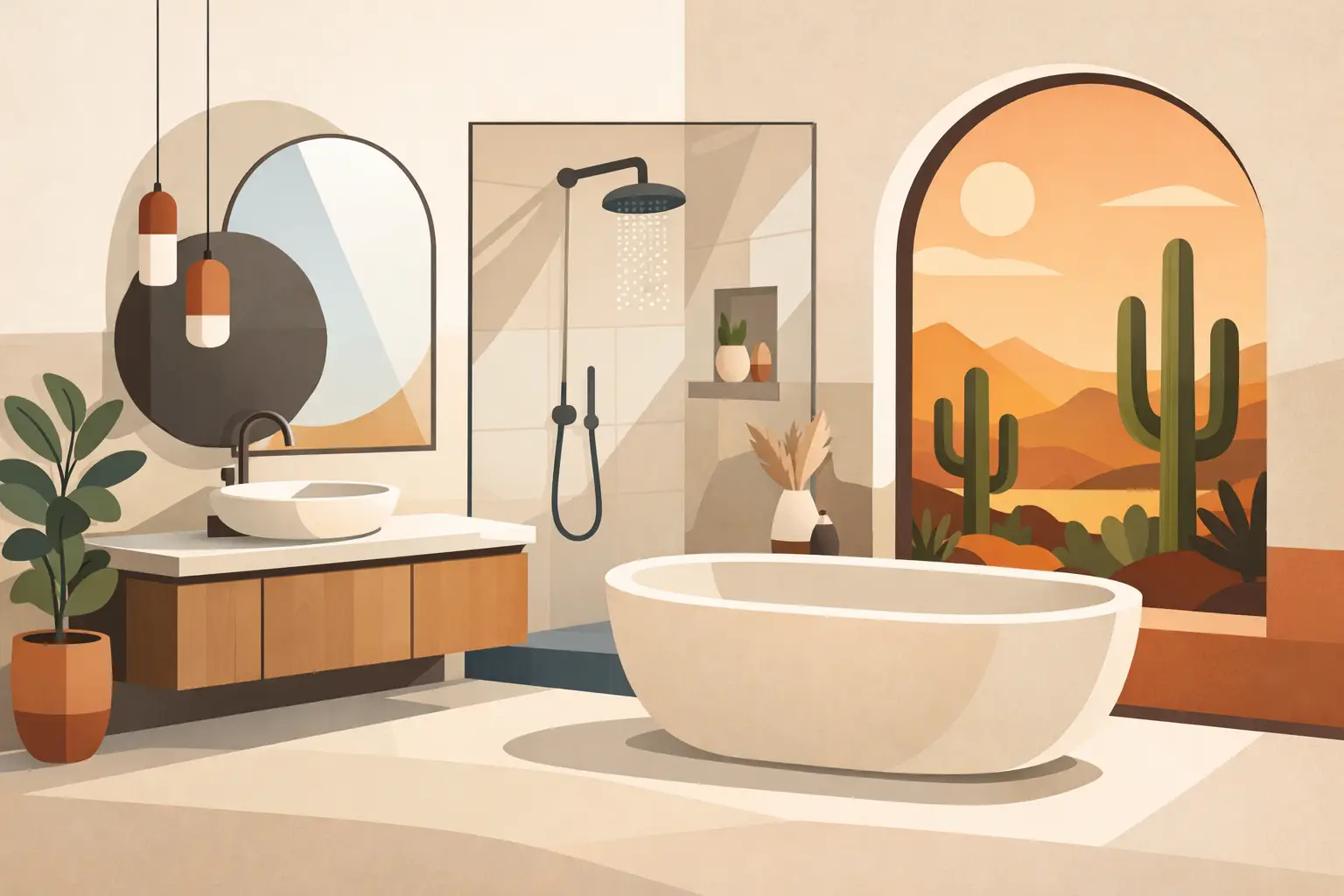
Cool gray bathrooms dominated remodeling for years, but 2026 is moving in a more inviting direction. Homeowners are choosing soft earth tones, warm whites, sand, clay, mushroom, muted olive, and natural wood-inspired finishes. These colors create a calm setting without making the room feel dark or overly themed.
This does not mean every bathroom needs brown tile or rustic cabinetry. A clean, contemporary bathroom can still feel warm through an oak-toned vanity, brushed nickel or champagne bronze hardware, textured wall tile, or a paint color with a subtle beige undertone. The goal is visual comfort and a finish palette that feels considered rather than cold.
In a smaller hall bath, lighter warm neutrals can help preserve a sense of openness. In a larger primary bathroom with good natural light, deeper greens, charcoal accents, or rich wood cabinetry may create more presence. The right choice depends on room size, lighting, and how the bathroom connects to the rest of the home.
Natural Texture Over Busy Pattern
Texture is becoming more important than highly decorative pattern. Expect to see handmade-look ceramic tile, honed stone looks, fluted vanity details, ribbed glass, and matte finishes. These selections add depth while remaining easier to live with than a bold tile pattern that can feel dated quickly.
Large-format porcelain remains a practical favorite for shower walls and floors. It offers a clean appearance with fewer grout lines, which can reduce routine cleaning. Porcelain that resembles limestone, travertine, or concrete gives homeowners the character of natural materials with dependable performance in a wet environment.
Spa Features Are Becoming More Practical
The spa-inspired bathroom is still popular, but the 2026 version is more focused on daily comfort than excess. Homeowners want showers that feel generous, lighting that supports a calmer routine, and layouts that reduce clutter. They are also asking a more practical question before every upgrade: Will this feature improve how we use the room?
A curbless shower is one example. It provides a streamlined appearance and can improve accessibility, but it requires careful floor slope, waterproofing, drainage planning, and often more coordination during construction. When properly designed, it can be a lasting investment. When squeezed into an unsuitable layout without adequate preparation, it can create water-management concerns.
Oversized shower niches, integrated benches, handheld shower fixtures, and shower systems with separate controls are also gaining interest. These features support comfort for different household members while making the shower more functional. A bench can be helpful for shaving, bathing children, or future aging-in-place needs, but it must be built with correct slope and waterproofing so water does not sit on the surface.
Freestanding tubs remain a strong design choice for primary bathrooms with enough floor space. They work best when the room can support both a comfortable bathing area and a properly sized shower. In a tight layout, expanding the shower or adding storage often delivers more value than forcing in a tub that is difficult to clean around and rarely used.
Water-Wise Fixtures Belong in Arizona Bathrooms
Water efficiency is not a short-term trend in the Phoenix area. It is a responsible planning decision. Modern low-flow toilets, WaterSense-style faucets, and efficient showerheads can reduce water use without giving up the performance homeowners expect.
The key is selecting quality fixtures and planning the plumbing correctly. A low-flow showerhead that produces weak pressure is frustrating. A well-designed fixture with good spray coverage and pressure-balancing controls can feel comfortable while helping manage household water use.
Hard water also deserves attention during fixture selection. Matte black and darker finishes can look sharp, but mineral spotting may be more visible depending on the water and cleaning routine. Brushed finishes, lighter metals, and easy-clean surface options can be more forgiving. There is no single best finish, but homeowners should choose one with both appearance and upkeep in mind.
Storage Is Being Built Into the Design
A beautiful bathroom quickly loses its appeal when counters are crowded with cords, skincare products, towels, and cleaning supplies. That is why storage is taking a more central role in bathroom design trends 2026.
Floating vanities remain popular because they make the floor feel more open and simplify cleaning underneath. However, a floating vanity should still provide enough drawer space for the household. Deep drawers with interior organizers are generally more useful than a large cabinet with one open shelf. Drawers make it easier to reach daily items without kneeling or sorting through a crowded cabinet.
Recessed medicine cabinets are another practical upgrade. They preserve counter space and give frequently used items a designated place. In a primary bathroom, a tall linen cabinet or built-in storage tower can reduce the need to store towels elsewhere in the home.
Electrical planning matters here as well. Outlets placed inside drawers or cabinets can help contain electric toothbrushes, razors, and hair tools. These details must be planned before drywall and finish work begin, which is why a complete scope is more valuable than making design decisions one at a time during construction.
Layered Lighting Makes the Room Work Better
One central ceiling fixture rarely provides enough light for a bathroom. In 2026, homeowners are choosing layered lighting plans that support grooming, nighttime use, and a more relaxing environment.
Good vanity lighting reduces shadows around the face. Sconces placed beside the mirror are often more effective than a single fixture directly above it, though the best configuration depends on mirror size, wall space, and the existing electrical layout. Recessed ceiling lights can provide general illumination, while a shower-rated recessed fixture improves visibility in the bathing area.
Dimmable lighting is a small upgrade with a noticeable impact. Brighter light is useful when getting ready for work, while a lower setting is more comfortable late at night. Toe-kick lighting beneath a vanity can also serve as a subtle night light without illuminating the entire room.
Natural light remains valuable, particularly in Arizona. Privacy glass, properly selected window coverings, and moisture-resistant materials can help homeowners make use of daylight without sacrificing comfort or privacy.
Thoughtful Accessibility Is Becoming Standard Planning
Many homeowners are designing bathrooms to serve them longer, even if they are not planning a fully accessible remodel today. This approach does not require a clinical-looking room. It means considering features that improve safety, flexibility, and comfort for people of different ages and mobility levels.
A wider shower entry, lever-style faucet handles, a handheld showerhead, blocking behind walls for future grab bars, and a vanity at a comfortable height are examples of choices that can be incorporated into a polished design. Planning these features during a renovation is typically simpler than opening finished walls later.
Slip resistance should also be part of the tile conversation. A glossy tile may look attractive on a display board, but a bathroom floor needs appropriate traction, especially near a shower or tub. Smaller tile can provide more grout lines for grip, while some larger porcelain options are manufactured with textured finishes. A contractor can help weigh the look, cleaning requirements, and safety of each option.
Choose Trends That Support the Way You Live
The strongest 2026 bathroom designs will not look identical from home to home. A family bathroom may need durable surfaces, double sinks, and easy-to-clean flooring. A primary suite may prioritize a larger shower, better lighting, and a quiet retreat-like feel. A guest bathroom may benefit most from efficient storage and a durable finish package that complements the rest of the house.
Before choosing tile or fixtures, start with the daily problems the remodel should solve. Is the shower too small? Does the vanity offer no usable storage? Are there moisture concerns, worn finishes, outdated plumbing, or poor lighting? Clear answers help create a design that looks current while addressing the work the room needs to do.
At D3 Construction LLC, the remodeling process begins with understanding the home, the vision, and the budget before construction starts. A detailed proposal, material guidance, permit coordination when needed, and a final walkthrough give homeowners a clear path from an outdated bathroom to a finished space built with care.
A well-planned bathroom does more than reflect a trend. It gives your household a cleaner, safer, more comfortable space that remains easy to enjoy long after the design boards and samples are put away.